

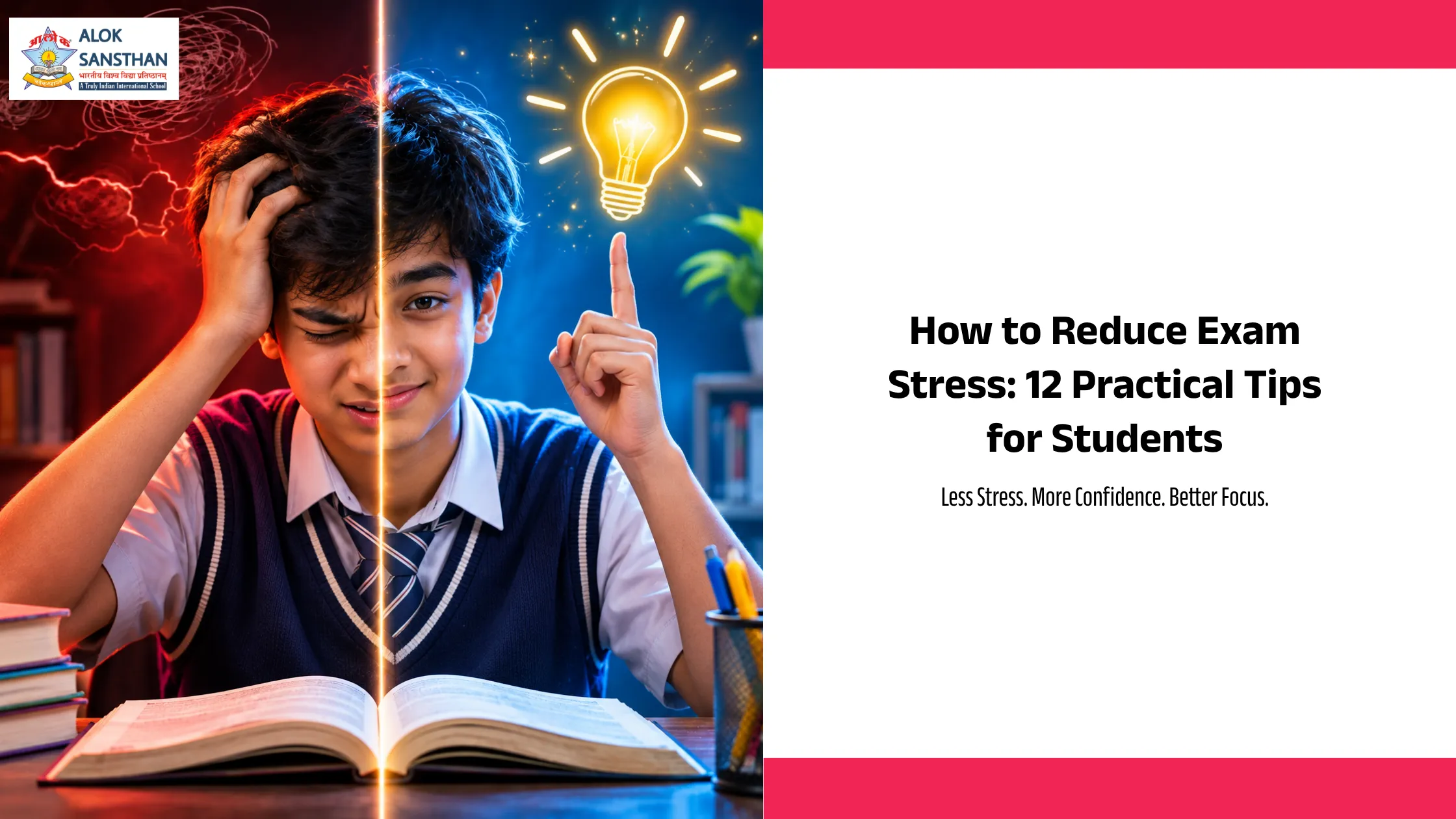
Exams are approaching. You have completed some chapters, but a few important topics are still left. Your classmates seem confident and your family keeps asking about your preparation. Even when you sit down to study, you find yourself worrying about marks instead of focusing on your books.
Many students experience this pressure during examinations. Some nervousness is normal, but too much worry can affect your concentration, sleep and confidence.
Learning how to reduce exam stress can help you feel calmer and handle difficult situations. Here are 12 practical tips to manage exam pressure before, during and after your examinations.
What Is Exam Stress?
Exam stress is the worry or pressure students feel when preparing for or taking examinations. It may come from wanting good marks, meeting expectations or feeling unsure about their preparation.
Feeling slightly nervous before an important paper is common. You might worry about difficult questions or whether you have studied enough.
However, stress becomes harder to manage when these thoughts continue throughout the day or affect your usual activities.
Exam stress management does not mean removing every nervous feeling. It means learning to handle pressure without allowing it to control your daily life.
What Causes Exam Stress in Students?
Students experience exam pressure for different reasons. Sometimes, several concerns build up at once.
Common causes of exam stress include:
- Fear of failure: Worrying about low marks or failing an examination.
- Family expectations: Feeling pressure to achieve results that parents or relatives expect.
- Unfinished syllabus: Having too many chapters left with limited preparation time.
- Comparison with classmates: Believing other students are better prepared.
- Board exam pressure: Worrying about results and future subject or course choices.
These concerns can become stronger during Class 10 and Class 12 board examinations, when discussions about marks and future plans become more frequent.
Common Signs and Symptoms of Exam Stress
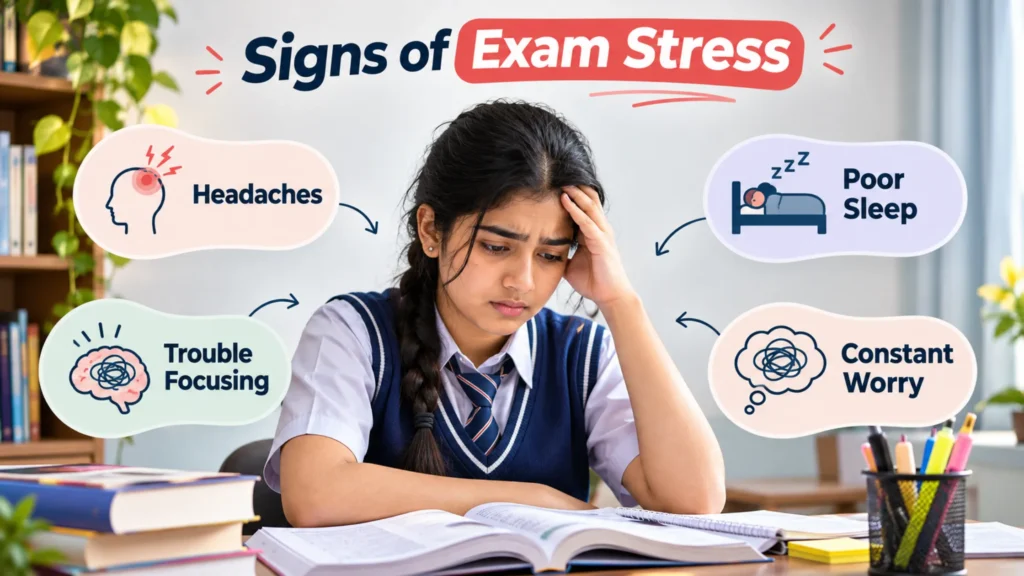
Exam stress affects students in different ways. Some notice changes in their mood, while others experience physical discomfort or changes in daily habits.
Common exam stress symptoms include:
- Emotional signs: Feeling worried, frightened, irritated or overwhelmed.
- Physical signs: Headaches, stomach discomfort, tiredness or difficulty sleeping.
- Concentration problems: Reading the same page repeatedly without understanding it.
- Behavioural changes: Avoiding studies or losing interest in regular activities.
- Constant worry: Thinking about exam results even while trying to relax.
These symptoms do not always indicate a serious problem. However, frequent or intense symptoms deserve attention, especially when they affect everyday life.
12 Practical Ways to Reduce Exam Stress
Knowing how to deal with exam stress starts with choosing small actions that suit your situation. You do not need to change your entire routine at once.
1. Identify What Is Causing Your Exam Stress
When you feel overwhelmed, try to identify your biggest concern instead of treating every worry as one problem.
Take a notebook and write down what is bothering you most. It could be a difficult mathematics chapter, an upcoming board examination or uncertainty about your marks.
Next, separate your concerns into things you can work on and things you cannot control.
For example, you can ask your teacher to explain a confusing topic, but you cannot know which questions will appear in the examination.
Choose one action you can take today.
This helps you focus on a specific problem rather than worrying about several unknown outcomes.
2. Make Your Study Plan Less Overwhelming
An unrealistic study plan can increase pressure.
If you decide to finish several difficult chapters in one evening, you may feel disappointed when you cannot complete everything.
Instead, choose two or three important tasks for the day. Give yourself enough time to understand each topic.
Keep some flexibility for questions that take longer than expected.
If planning feels difficult, learn how to create a realistic study timetable that fits your subjects and daily routine.
A manageable plan gives you a clear starting point without making every hour feel like a deadline.
3. Avoid Last-Minute Exam Panic
The day before an examination is not the best time to attempt every unfinished chapter.
Trying to learn too much at once can leave you confused about topics you already understand.
Focus on reviewing familiar concepts, important formulas and topics highlighted by your teacher.
Keep your admit card, stationery and other required materials ready in advance.
For detailed revision guidance, learn how to revise effectively for exams.
If some topics remain unfinished, use your remaining time carefully. Avoid rushing through new material simply because you feel afraid.
4. Take Study Breaks Without Feeling Guilty
Some students feel guilty whenever they close their books.
Even during a short break, they keep thinking about unfinished chapters. As a result, they never feel properly rested.
Give yourself permission to pause between study sessions.
You could walk around your home, sit outside for a few minutes or enjoy a relaxing activity.
Choose something that helps you feel refreshed without becoming a long distraction.
During your break, avoid checking your books repeatedly.
Rest is not something you must earn by completing your entire syllabus. It is a normal part of a balanced routine.
5. Get Enough Sleep Before Exams
Staying awake late may seem like a way to gain extra study time. However, insufficient sleep can leave you tired and less alert the following morning.
Sleep supports learning, memory and emotional wellbeing. Teenagers generally need around eight to ten hours of sleep each night.
Try to maintain a regular bedtime during examination weeks.
If unfinished tasks are keeping you awake, write them down before going to bed. You can return to them the next day.
Avoid sacrificing several hours of sleep just to finish one more chapter.
6. Use Slow Breathing to Calm Your Mind
When you feel nervous, your breathing may become faster than usual.
A short breathing exercise can help you settle when exam anxiety begins to rise.
Try these simple steps:
- Sit comfortably and relax your shoulders.
- Breathe in gently through your nose.
- Breathe out slowly without forcing your breath.
- Repeat for a short time at a comfortable pace.
You do not need to hold your breath or follow a difficult counting method.
Practise whenever you feel tense or before starting a challenging task.
You can also explore the benefits of meditation for students for another approach to relaxation.
7. Stop Comparing Yourself With Other Students
Imagine hearing a classmate say that they have revised the entire science syllabus twice.
You have completed only one round of revision, so you begin doubting your preparation.
But you do not know how well that classmate understands each chapter. You only know what they have shared.
Instead of comparing yourself with others, notice what you understand today that seemed difficult last week.
You can also limit conversations about expected marks or completed chapters if they make you uncomfortable.
Students learn at different speeds and have different strengths.
Another student’s preparation does not determine your examination result.
8. Manage Fear of Failure and Negative Thoughts
Thoughts such as “What if I fail?” or “What if I disappoint my parents?” can make an upcoming examination feel frightening.
When these thoughts appear, remind yourself that something you fear is not necessarily going to happen.
For example, instead of thinking, “I will definitely fail mathematics,” try saying, “Some mathematics topics are difficult for me, but I can still practise questions I understand.”
You do not need to pretend that everything will go perfectly.
If a negative thought keeps returning, write it down. Ask yourself whether it is a fact or simply something you are afraid might happen.
Then focus on what you can do next instead of expecting the worst.
9. Talk to Someone You Trust About Exam Pressure
Exam worries can feel harder to manage when you keep them to yourself.
If you are struggling, speak with a parent, teacher, trusted friend or school counsellor.
Try to explain what is troubling you rather than simply saying that you feel stressed.
For example, you could tell your teacher, “I understand the first part of this chapter, but I get confused when solving longer questions. Could you explain one example?”
If repeated questions about marks are making you uncomfortable, explain this to your parents respectfully.
You do not have to wait until you feel completely overwhelmed to ask for support.
10. Stay Physically Active and Eat Regular Meals
During exam preparation, students often spend long hours sitting indoors.
Make time for some movement each day. A short walk, gentle stretching or a little outdoor play can give you a change from studying.
You do not need to begin an intense exercise routine during examinations.
Try to eat regular meals and drink enough water throughout the day.
Avoid skipping lunch or dinner simply because you want to finish another chapter.
Choose activities and foods that suit your usual routine. Looking after your basic physical needs supports your general wellbeing during exam weeks.
11. Stay Calm When Your Mind Goes Blank in the Exam Hall

You read a question and suddenly cannot remember an answer that seemed easy the previous evening.
This can feel frightening, especially when other students are already writing.
If it happens, pause briefly instead of rushing into an answer.
Read the question again. Look for important words that explain what you need to answer.
If you still feel stuck, move to another question when the examination rules allow it. Return to the difficult question later.
One forgotten answer does not mean the entire paper will go badly.
For guidance on presenting answers clearly, read how to write an exam paper.
12. Stop Overthinking After Each Exam
After an examination, students often gather outside the hall and begin comparing answers.
Someone may mention a different answer to a question you thought you had solved correctly. Soon, you start calculating marks and replaying the entire paper.
Once you submit your answer sheet, these discussions cannot change what you wrote.
If checking answers immediately makes you anxious, politely step away from the conversation.
Have a meal, relax for a while and turn your attention to the next subject when you are ready.
You can review mistakes later when you receive useful feedback.
There is no need to spend the rest of your day worrying about a completed paper.
How Can Parents and Teachers Help Students Manage Exam Stress?
Students need more than academic guidance during examination periods. They also benefit from adults who listen and respond calmly.
Parents can ask what kind of help their child needs instead of repeatedly asking about expected marks.
Avoid comparing children with siblings, neighbours or classmates. Such comparisons may make students reluctant to discuss their difficulties.
Teachers can encourage questions, explain confusing topics and help students understand which areas need attention.
During board examinations, families can also explore practical ways to prepare for board exams without making results the subject of every conversation.
Recognising sincere effort matters too. Students who feel comfortable discussing problems may find it easier to ask for help.
When Should Students Seek Extra Help for Exam Stress?
Everyday calming habits may not be enough when stress becomes persistent or overwhelming.
If worry regularly affects your sleep, prevents you from attending school or makes ordinary activities difficult, tell a trusted adult.
Frequent panic, ongoing distress or feeling unable to cope are also reasons to seek additional support.
A school counsellor or qualified healthcare professional can help you understand what you are experiencing and discuss suitable next steps.
Seeking help early is sensible. You do not need to wait until the situation becomes unbearable.
Conclusion
Examinations matter, but they are only one part of your education.
You cannot control every question, result or expectation. But you can choose how to respond when you start feeling stressed.
Start with a few practical habits that suit your situation. Give yourself time to develop them instead of expecting immediate changes.
Most importantly, remember that one examination cannot measure everything you know or everything you are capable of achieving.
At Alok Sansthan, we believe education is about more than exam results. Students need encouragement, confidence and opportunities to grow. Explore our school and learn more about our approach to student learning and development.