


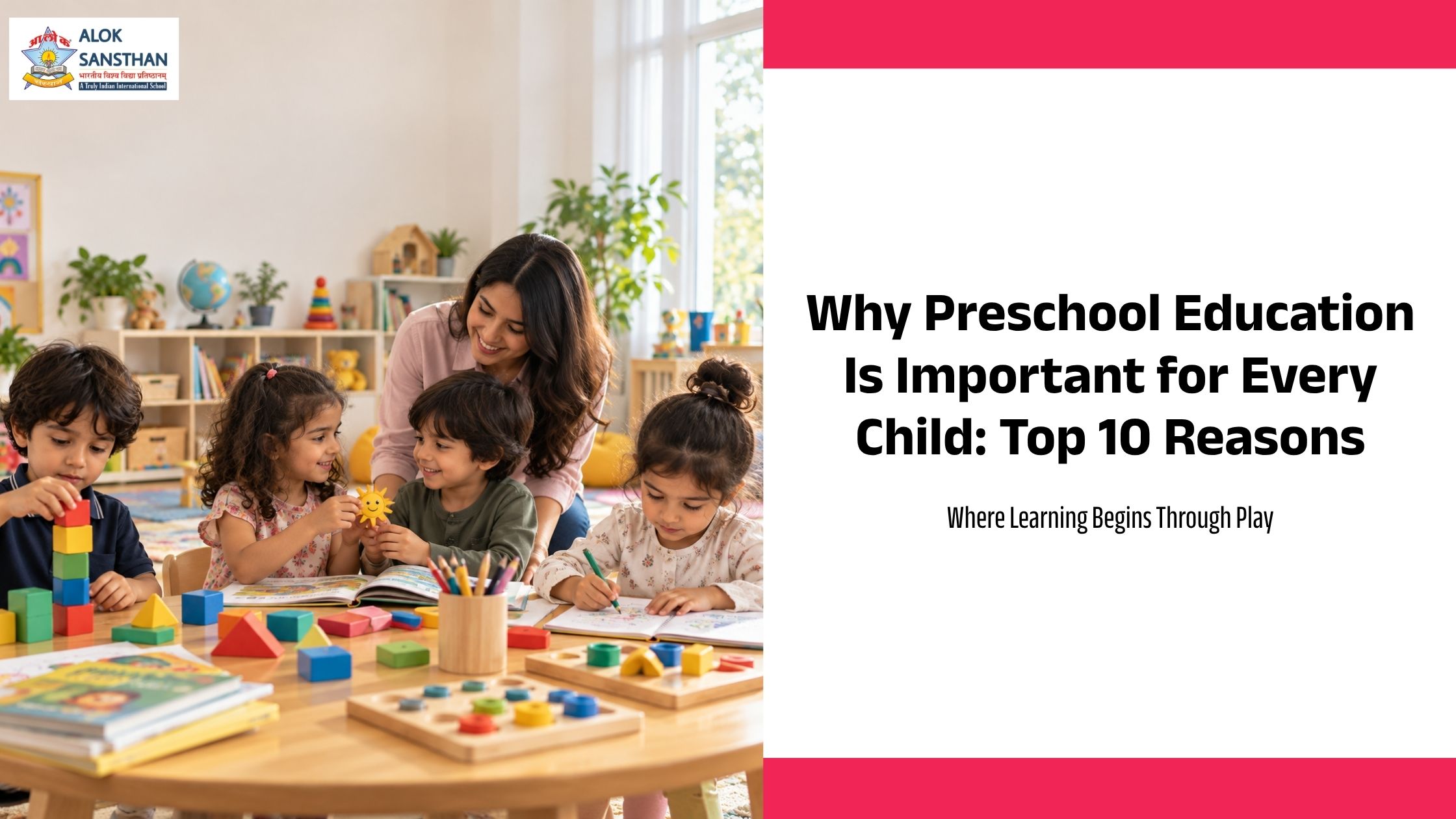

Many parents ask a simple question: does a young child really need preschool? At first, it may seem that children can learn enough at home through games, stories and everyday activities. Preschool offers a different kind of learning experience. It gives children a chance to learn, play and interact in a structured environment with teachers and other children.
Preschool education is not only about teaching letters, numbers or colours. It also helps children communicate, make friends, express feelings, become independent and develop a positive attitude towards learning. These early experiences can influence how children respond to learning and new situations as they grow.
The importance of preschool education becomes easier to understand when we look at the different skills children develop during this stage. A good preschool provides age-appropriate activities that support learning without making early education feel stressful. In simple terms, what is preschool education? It is an early learning stage where children develop basic academic, social, emotional and physical skills through age-appropriate experiences.
Here are the top 10 reasons why preschool education can be an important part of early childhood.
Top 10 Reasons Why Preschool Education Is Important
1. Builds a Strong Foundation for Learning
Preschool introduces children to basic learning concepts in a simple and engaging way. At this stage, the goal is not to make children study like older students. It is to help them become comfortable with learning and understand basic ideas through activities they can enjoy.
Children may learn letters, numbers, shapes, colours and sounds through stories, games and hands-on activities. They also get opportunities to explore ideas rather than only memorising information.
Some common early learning experiences include:
- Recognising letters and simple words
- Counting objects and understanding basic numbers
- Identifying shapes, colours and patterns
- Listening to stories and taking part in learning games
- Connecting simple concepts with everyday experiences
These experiences give children an early foundation for future learning. They also help children become familiar with classroom activities and understand that learning can be an enjoyable part of everyday life.
2. Develops Communication and Language Skills
Children need regular opportunities to listen and speak if they are going to become confident communicators. Preschool creates many such opportunities throughout the day.
Stories, rhymes, conversations and group activities expose children to new words and encourage them to express their thoughts. A child may talk about a picture, answer a question or share something from home.
Preschool activities can support:
- Vocabulary development
- Listening skills
- Clear speech and expression
- Asking and answering questions
- Confidence while speaking
Communication is also about listening to others. Through everyday conversations and group activities, children learn to wait, listen, respond and express what they need. These skills become useful both inside and outside the classroom.
3. Teaches Children to Socialise and Work with Others
A child who spends most of the day with family gets a different learning experience when they start interacting with a group of children.
Preschool gives children regular opportunities to play and work with others. They learn simple social behaviours that are difficult to practise through individual activities alone.
Children gradually learn to:
- Share toys and learning materials
- Wait for their turn
- Take part in group activities
- Cooperate with other children
- Respect different ideas and preferences
For example, a group activity may require children to build something together. They need to share materials and work towards a common goal. Such experiences teach cooperation in a practical way.
These everyday interactions are an important part of early learning because children learn not only from teachers but also from their classmates.
4. Supports Emotional Development
Young children experience many emotions but may not always know what those feelings mean or how to express them. Preschool can give them a supportive environment where they can gradually understand their emotions.
A child may feel excited during a game, disappointed after losing or upset when something does not go as expected. Teachers can help children recognise these feelings and respond in a suitable way.
Preschool can give children opportunities to learn:
- How to name different feelings
- How to express emotions appropriately
- How to handle small frustrations
- How to understand the feelings of others
- Why patience and kindness matter
Emotional development takes time. Preschool does not expect children to handle every situation perfectly. Instead, everyday experiences give them chances to understand themselves and become more aware of people around them.
5. Builds Confidence and Independence
Small tasks can become big achievements for young children. Finishing a drawing, answering a question or putting away learning materials can make a child feel capable.
Preschool provides opportunities for children to try things independently while having support when they need it. This balance matters. Children get a chance to solve small challenges without feeling that they have to do everything alone.
They may learn to:
- Complete simple tasks on their own
- Make small choices
- Ask for help when needed
- Participate in classroom activities
- Try something new without worrying about mistakes
When children see that they can do things by themselves, their confidence can grow. When these experiences are repeated regularly, children can become more comfortable taking responsibility for simple tasks at school and at home.
6. Develops Thinking and Problem-Solving Skills
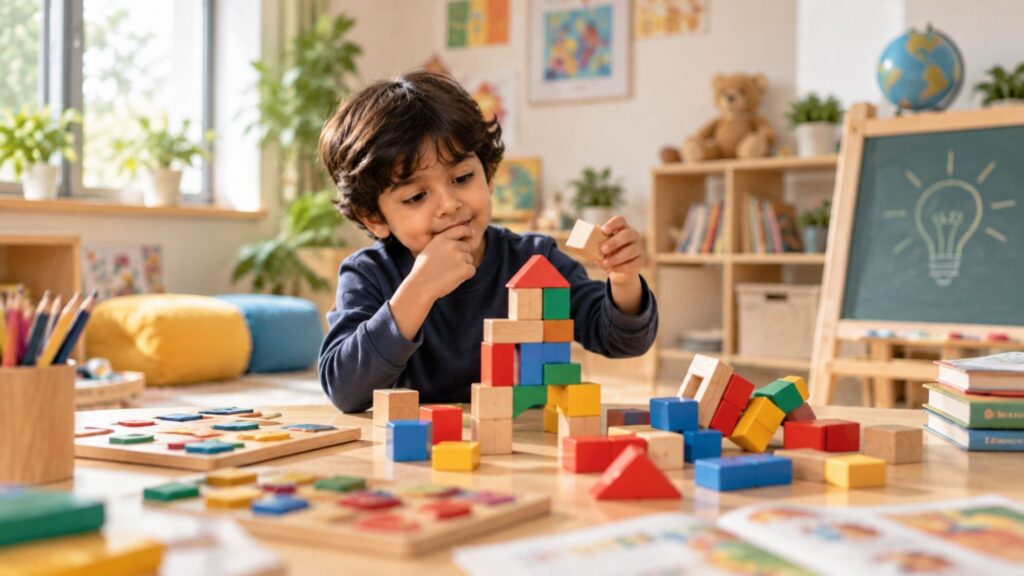
Preschool learning is not always about finding one correct answer. Many activities encourage children to observe, think and try different approaches.
Puzzles, building blocks, matching games and simple classroom challenges can give children opportunities to solve problems. They may need to decide where a puzzle piece fits or find another way when their first attempt does not work.
These activities encourage children to:
- Observe carefully
- Ask questions
- Make simple decisions
- Try different solutions
- Learn from mistakes
For example, when a block tower falls down, a child may try to build it again in a different way. This simple experience encourages thinking and experimentation.
These activities show why preschool education is important beyond basic academic learning. Children get regular opportunities to think, try different ideas and learn from what happens.
7. Encourages Creativity and Curiosity
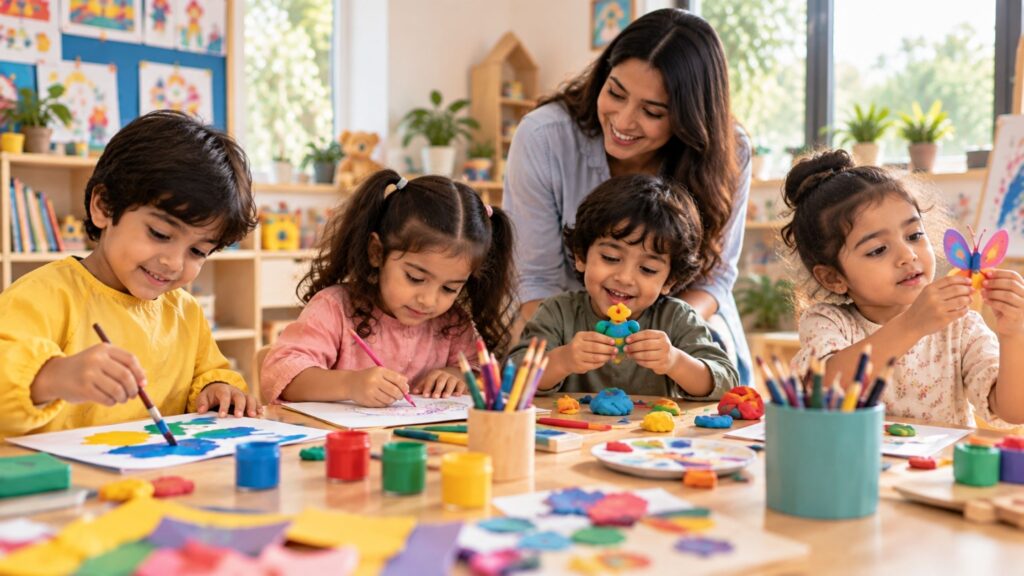
Children need space to imagine and create. Preschool can provide this through activities where there is more than one possible way to express an idea.
Drawing, painting, craft, music, storytelling and pretend play can help children explore their imagination. A child may create a picture of an imaginary place or act out a story with friends.
Creative activities can encourage:
- Imagination
- Self-expression
- Curiosity
- Exploration of new ideas
- Interest in art, music and stories
Curiosity is equally important. When children are encouraged to ask questions and explore their surroundings, learning becomes an active experience rather than something they simply receive from a teacher.
The benefits of preschool education therefore go beyond academic preparation. Children also get opportunities to discover what interests them and express ideas in their own way.
8. Develops Healthy Habits and Daily Routines
Children learn many habits through regular practice. Preschool introduces simple routines that become part of everyday learning.
A typical activity may involve putting materials away after use, washing hands, following instructions or getting ready for the next activity. These actions may look small but they teach children how to manage simple responsibilities.
Children can gradually learn:
- Following a daily routine
- Keeping personal and classroom items organised
- Cleaning up after activities
- Practising basic hygiene
- Listening to and following simple instructions
Routines also help children understand what to expect during the day. With regular practice, simple habits can become more familiar and easier to follow.
When these habits become part of everyday life, children gradually need less help with simple tasks. This can make daily activities easier for both children and parents.
9. Strengthens Physical and Motor Skills
Physical development is another important part of early learning. Children need opportunities to use both their hands and their whole body.
Activities such as colouring, drawing, clay work and building with small objects require controlled hand movements. These are examples of fine motor activities. Running, jumping, balancing and outdoor games involve larger body movements.
Preschool activities can support:
- Hand and finger control
- Eye-hand coordination
- Balance
- Body movement
- Strength and coordination
These skills are useful for everyday activities such as holding a pencil, using classroom materials and participating in outdoor play.
A good learning environment gives children enough opportunities to move, create and practise these skills instead of keeping them seated for long periods.
10. Prepares Children for Primary School
Starting primary school is a major change for a young child. A new environment, new teachers, classroom routines and group activities can feel unfamiliar at first.
Preschool gives children an early experience of being part of a learning environment. They become familiar with simple classroom expectations and learn how to take part in activities with other children.
Before entering primary school, children can become more comfortable with:
- Listening to teachers
- Following classroom instructions
- Completing simple activities
- Working in groups
- Moving through a structured daily routine
This does not mean preschool should become an early version of primary school. The purpose is to give children suitable experiences that make the transition easier.
This is one reason why preschool is important. Children get time to become comfortable with learning routines before they move to a more formal stage of education. This is also an important part of preschool education in India where early learning is increasingly viewed as a foundation for later education.
Conclusion
Preschool education is much more than an introduction to books, numbers and letters. It gives children opportunities to learn through play, interaction, conversation and everyday activities. Along the way, they can develop communication skills, social understanding, emotional awareness, confidence, thinking abilities, creativity, healthy habits and physical skills.
The right early learning environment should allow children to explore while giving them enough structure to feel comfortable and supported. Parents should therefore look beyond academic activities when thinking about preschool. A good preschool should support different areas of child development while keeping learning enjoyable.
At Alok Sansthan, the pre-primary approach focuses on a nurturing and engaging environment where children learn through structured activities, stories and creative play. This approach gives young learners opportunities to develop early literacy, numeracy, thinking, social and motor skills while becoming comfortable with learning.