


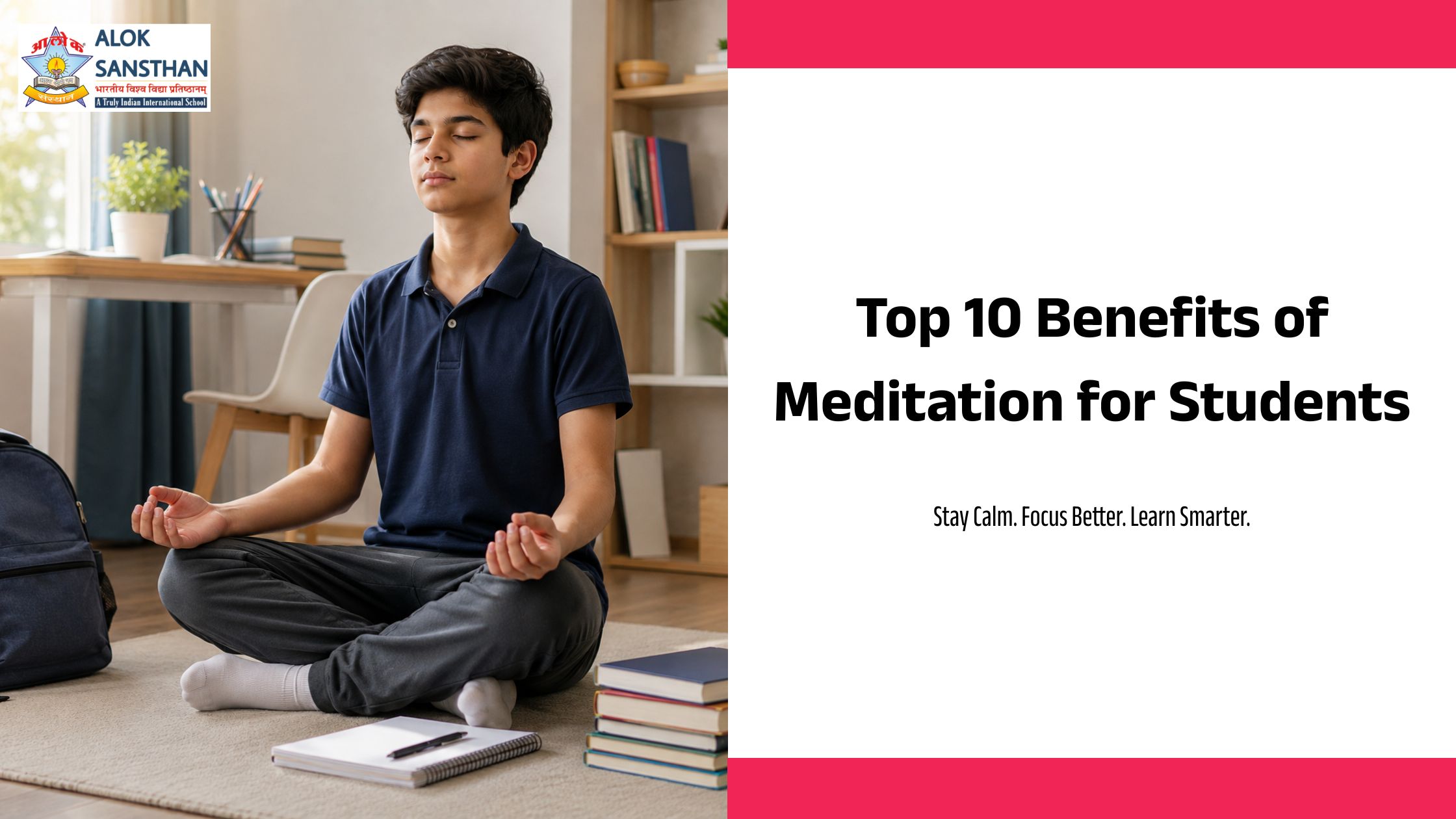

Between homework, school projects, exams and after-school activities, a student’s day fills up fast. Add phone notifications and social media into the mix, and it becomes hard to sit down and focus on one task at a time.
This is where meditation can help. It is a simple practice that takes only a few minutes and can be added to any daily routine. This article explains the top 10 benefits of meditation to students and looks at the importance of meditation for students in everyday school life, along with simple meditation benefits for students that go beyond the classroom.
What Is Meditation?
Meditation is a simple practice of sitting quietly and paying attention to one thing, such as breathing, a sound or a thought. It trains the mind to stay calm and focused instead of jumping from one distraction to another.
Meditation does not require any special equipment or belief system. A student can practice it at home or even for a few minutes before starting homework. With regular practice, it becomes a small habit that supports focus, calmness and better daily routine. Many people simply call this student meditation, since it fits so naturally around school life.
Key Benefits of Meditation for Students
1. Improves Focus and Concentration
Students often move between homework, phones, school activities and other distractions within a single hour. A short meditation practice can help a student pause and bring attention back to one task. This is one of the most common reasons students try meditation for concentration.
Even five minutes of focused breathing before opening a textbook can make it easier to stay on one page instead of getting distracted every few minutes. This kind of meditation for focus can improve focus while studying, and better concentration for students often starts with a habit as small as this.
2. Helps Students Manage Stress
Exams, homework deadlines and busy school schedules can build up stress quickly. Meditation and stress relief are closely connected because slow breathing and quiet attention can calm a racing mind.
Before a test or a difficult school day, a short meditation session may help a student feel steadier. This does not remove the pressure of exams, but it can make that pressure easier to handle. Many students turn to meditation for exam stress in the days leading up to a test.
3. Supports Better Study Habits
A calm and focused mind supports a better study routine. When a student feels scattered, even simple homework can take much longer to finish. Meditation before studying can act like a short reset button between subjects or before starting a study session.
This connection between meditation and study habits is not about memorising more information in less time. It is about approaching study time with a clearer head, which is exactly why some students call it meditation for study.
4. May Support Memory and Learning
Meditation does not directly increase intelligence or guarantee better marks. What it may support is attention and a calmer state of mind, both of which play a role in learning.
When a student is distracted or anxious, it becomes harder to absorb new information. A calmer and more attentive mind can make it easier to follow a lesson and recall information later during revision. This is why some parents ask about meditation for academic performance, though it should be seen as one small support among many, not a guarantee of better marks.
5. Helps Students Stay Calm and Emotionally Balanced
School life includes small ups and downs almost every day, from a disappointing test score to a disagreement with a friend. Meditation and emotional well-being are linked because regular practice can help a student notice their feelings without reacting immediately.
This kind of mindfulness for students is useful for staying calm before speaking in class.
6. Encourages Better Sleep
A calm evening routine may help students prepare for better rest. Many students go to bed with thoughts still running about homework, tests or the next school day. A short meditation session before bedtime can act as a signal to the mind that it is time to slow down.
This is not a medical solution for sleep problems, but the link between meditation and better sleep can be a helpful part of a wind-down routine, especially on nights before an exam.
7. Builds Self-Discipline
Sitting quietly for even five minutes a day requires some effort at first. Practising this regularly can help a student build self-discipline, useful far beyond meditation itself.
Students who keep even a short routine going often find it easier to stick to other habits, such as a fixed homework time or a regular sleep schedule.
8. Helps Students Deal With Distractions
Mobile phones, social media and constant notifications make it difficult to focus on homework without checking a screen every few minutes. Meditation trains attention, and this skill can carry over into daily study time.
A student who practises meditation regularly may find it a little easier to notice when their mind has wandered towards a phone and gently bring it back to the task at hand.
9. Encourages Positive Thinking and Self-Awareness
Meditation gives students a few quiet minutes to sit with their own thoughts instead of reacting to everything around them. Over time, this can support a more positive outlook and better understanding of one’s own feelings and reactions.
This does not mean meditation removes negative thoughts. It gives a student a small pause to notice a thought before reacting to it.
10. Supports Overall Student Well-Being
Focus, calmness, better sleep and emotional balance all connect to one larger goal, overall student well-being. A student who feels calmer and more focused is usually better prepared to handle the daily demands of school life.
Meditation is not a single fix for every challenge students face, but a simple and consistent practice can support a healthier daily routine.
How Does Meditation Help Students With Their Studies?
Meditation supports studies mainly by improving focus, calming pre-exam nerves and helping students return their attention to one task at a time. For many students, meditation for better focus during revision is the single most useful benefit.
A student preparing for an exam often faces two challenges: distraction and stress. Meditation addresses both. A few minutes of focused breathing before a study session can help reduce the urge to check a phone every few minutes. Before a test, the same practice can calm nervous thoughts and help a student approach the paper with a steadier mind.
Simple Meditation Techniques for Students
Students new to meditation do not need any complicated method. Here are a few beginner-friendly techniques for how to meditate for students:
- Deep breathing meditation: Sit comfortably, close your eyes and take slow, deep breaths.
- Mindfulness meditation: Notice sounds, thoughts or feelings without judging them.
- Focused breathing: Count each breath from one to ten, then start again.
- Guided meditation: Follow a short audio guide that gives simple instructions.
- Short five-minute meditation: Set a timer for five minutes and sit quietly, paying attention to breathing.
None of these techniques require special training. A quiet corner and a few uninterrupted minutes are enough to begin building daily meditation for students into a regular school routine.
How Long Should Students Meditate?
Beginners can start with just three to five minutes a day. There is no fixed medical rule for how long a student should meditate, and starting small is more useful than aiming for a long session and giving up after a few days.
As meditation becomes comfortable, a student can slowly increase the time to ten or fifteen minutes. The goal is consistency, not duration.
When Is the Best Time for Students to Meditate?
There is no single correct time, but a few moments work especially well for most students:
- Before studying: Helps clear distractions and settle the mind.
- Before school: A calm start can make the first few classes easier.
- After school: Useful for releasing built-up tension from a long day.
- Before an exam: A short session can reduce nervousness.
- Before sleeping: Supports a calm wind-down routine.
Students can try different times and see what fits naturally into their own schedule.
Meditation vs Yoga for Students
Meditation and yoga are related, but they are not the same practice. Yoga usually involves physical postures, breathing exercises and movement that support both body and mind. Meditation mainly focuses on attention, awareness and mental calmness, without requiring physical postures.
Both practices can support a healthy student routine in different ways, which is part of why the importance of meditation in school is now discussed alongside yoga and sports. Students who want to explore physical postures and breathing exercises can read our existing blog on the Benefits of Yoga.
Conclusion
Meditation is not a complicated practice reserved for experts. For students, it can be a simple daily habit that supports focus, calmness, better study routines and emotional balance during busy school life. It will not remove every challenge of exams or homework, but it can make those challenges easier to handle.
Students who want to try it do not need a long session or special setup. A few quiet minutes a day, practised consistently, is often enough to notice a difference in how calm and focused a school day feels.
At Alok Sansthan, we believe that a student’s growth goes beyond academics. We encourage healthy habits that support focus, confidence and overall well-being. With a balanced learning environment, Alok Sansthan helps students grow and learn with confidence.
Frequently Asked Questions
1. What are the benefits of meditation for students?
Meditation can help students improve focus, manage stress, build better study habits and stay calm during busy school days.
2. How does meditation help students in their studies?
Meditation can improve focus and concentration, reduce distractions and help students approach study sessions with a calmer mind.
3. How long should students meditate each day?
Students can start with 3 to 5 minutes a day and slowly increase the time as meditation becomes part of their routine.
4. What is the best meditation for students?
Simple practices such as deep breathing, mindfulness and focused breathing are good starting points for students who are new to meditation.
5. Why is meditation important for students?
Meditation is important for students because it can support focus, emotional well-being, stress management and a healthier daily routine.