



Board exams often feel like a big mountain to climb, especially when the syllabus looks endless and time seems to move faster than usual. But with the right plan and a steady approach, preparing for board exams 2027 does not have to be stressful. Students who start early, study smart and revise consistently usually walk into the exam hall with more confidence than those who rush at the last moment. This guide covers practical steps, a realistic study plan and simple strategies that can help students prepare for board exams in a calm and organised way.
When Should Students Start Preparing for Board Exams 2027?
The best time to start preparing for board exams is right from the beginning of the academic year, not a few months before the exam. Early preparation gives students enough time to understand concepts properly instead of memorising them under pressure.
A good way to divide the year is:
- First few months: Focus on understanding new topics and building strong basics.
- Middle of the year: Continue with regular topics while starting light revision of earlier chapters.
- Last two to three months: Shift focus almost completely to revision, practice papers and mock tests.
Starting early does not mean studying for long hours from day one. It simply means staying consistent so that revision does not turn into a last-minute struggle.
How to Prepare for Board Exams Step by Step
A clear, step-by-step approach works better than random studying. Here is a simple process students can follow.
- Understand the syllabus. Go through the full syllabus for each subject so nothing gets missed later.
- Know the exam pattern. Check the marking scheme, question types and time allotted for each section.
- Set realistic study goals. Break the syllabus into small, achievable targets instead of vague goals like “study everything.”
- Create a daily routine. A fixed routine builds discipline and reduces last-minute panic.
- Give time to difficult subjects. Spend extra time on subjects or topics that feel harder, instead of avoiding them.
- Practice regularly. Solve numerical problems, write answers and attempt questions instead of only reading.
- Revise frequently. Short, regular revision helps information stay in memory longer than one long revision session.
- Solve previous-year papers and sample papers. This helps students understand question patterns and manage time better.
- Track progress. Reviewing what has been completed and what still needs work keeps preparation on track.
Following these steps in order, rather than jumping between subjects randomly, makes board exam preparation feel far more manageable.
Board Exam Preparation Tips for Students
Along with a structured plan, small daily habits can make a real difference to how well a student prepares.
- Study in a quiet space with minimal distractions.
- Keep phones and social media away during study hours.
- Use short notes or flashcards for quick revision before exams.
- Study difficult subjects when energy levels are highest, usually in the morning.
- Take short breaks between study sessions instead of studying continuously.
- Sleep for at least 7 to 8 hours every night, especially during exam months.
- Stay physically active, even a short walk can help the mind stay fresh.
- Ask teachers for help immediately when a doubt comes up, instead of letting it pile up.
These habits are simple, but students who follow them consistently usually manage their preparation with much less stress.
How to Make a Board Exam Study Plan
A good board exam study plan should be realistic and easy to follow every day. It should include time for learning new topics, revising old ones and practicing questions.
A basic study plan usually includes:
- Daily study targets: Small, specific goals for each subject.
- Subject-wise time allocation: More time for difficult subjects, balanced time for easier ones.
- Revision time: Daily or weekly slots dedicated only to revising earlier topics.
- Practice time: Regular time for solving questions and sample papers.
- Breaks: Short breaks after every study session to avoid burnout.
- Weekly review: A quick check at the end of each week to see what has been covered and what needs more attention.
Here is a simple example of how a daily study routine might look during preparation months.
| Time | Activity |
| 6:00 AM – 7:00 AM | Revision of previous day’s topics |
| 7:00 AM – 8:00 AM | Getting ready for school |
| School hours | Regular classes |
| 4:30 PM – 5:00 PM | Short break after school |
| 5:00 PM – 6:30 PM | New topic study |
| 6:30 PM – 7:00 PM | Break |
| 7:00 PM – 8:30 PM | Practice questions or sample papers |
| 8:30 PM – 9:00 PM | Dinner and relaxation |
| 9:00 PM – 9:30 PM | Quick revision before sleep |
This is only an example. Students can adjust timings based on their school schedule and personal energy levels, as long as the routine stays consistent.
How to Study for Board Exams Effectively
Studying for long hours does not always lead to better results. Effective study depends more on how a student studies rather than how long they sit with books.
Some methods that genuinely help include:
- Active learning: Instead of only reading, try explaining concepts aloud or teaching them to someone else.
- Short study sessions: Studying in focused blocks of 40 to 50 minutes with short breaks works better than long, tiring sessions.
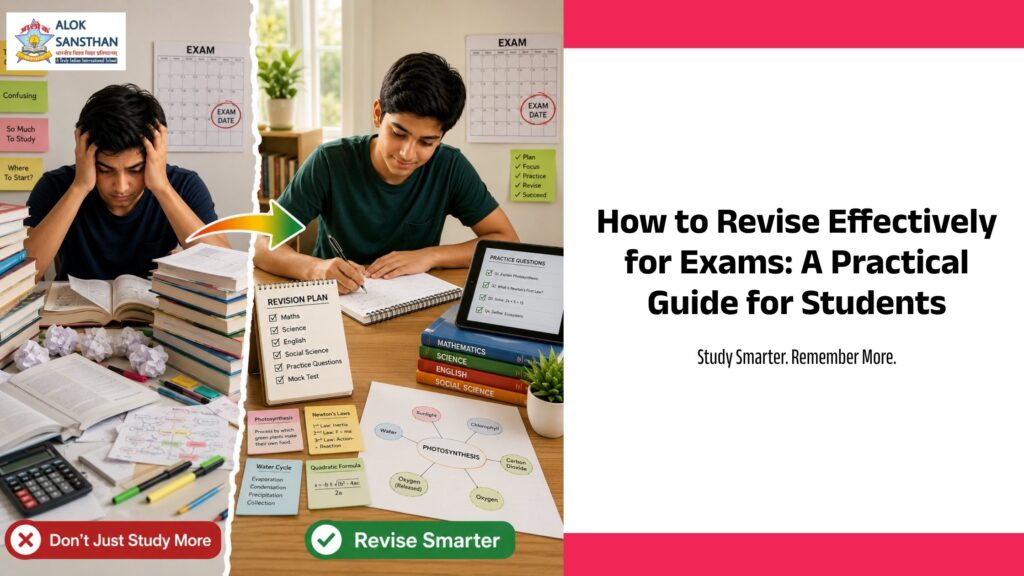
- Revision: Go back to earlier chapters regularly instead of leaving all revision for the end.
- Practice questions: Solve questions from textbooks, sample papers and previous-year papers.
- Writing answers: Practice writing full answers, not just reading them, since board exams test written expression too.
- Self-testing: Take small quizzes or tests on completed topics to check understanding.
- Removing distractions: Keep the study area free from phones, TV and unnecessary noise.
These methods help students remember concepts for longer and perform better under exam conditions.
Common Mistakes to Avoid During Board Exam Preparation
Even sincere students sometimes make mistakes that affect their preparation. Being aware of these can help avoid them.
- Starting too late: Delaying preparation leads to unnecessary pressure closer to exams.
- Only reading without practicing: Reading alone does not build exam readiness, practice does.
- Ignoring difficult subjects: Avoiding hard topics only makes them harder later.
- Skipping revision: Without regular revision, even well-understood topics can be forgotten.
- Studying continuously without breaks: This leads to fatigue and reduces focus over time.
- Depending only on memorisation: Understanding concepts helps far more than memorising answers.
- Ignoring sleep and health: Poor sleep and health directly affect concentration and performance.
Avoiding these common mistakes can make board exam preparation smoother and less stressful.
Final Weeks Before Board Exams
The last few weeks before exams should be used wisely, since this is usually when most improvement happens.
During this time, students should focus on:
- Revision: Go through all subjects at least once more, focusing on important topics.
- Sample papers: Attempt full-length sample papers under timed conditions.
- Previous-year questions: Solve these to understand recurring patterns and important topics.
- Weak topics: Give extra attention to areas that still feel unclear.
- Time management: Practice completing papers within the given time limit.
- Sleep: Maintain a regular sleep schedule instead of staying up late.
- Staying calm: Avoid last-minute panic, and trust the preparation already done.
The final weeks are not the time to start new topics. They should be used purely for consolidation and confidence-building
A supportive school can help students learn better and prepare well for their exams. Alok Sansthan provides a positive learning environment that supports students in their studies and overall growth.
Frequently Asked Questions
1. When should students start preparing for board exams 2027?
Students should start preparing from the beginning of the academic year. Early preparation gives enough time for learning, practice and revision.
2. How many hours should I study for board exams?
Most students can start with 3 to 5 hours of focused self-study each day. Study time can increase as exams get closer.
3. How can I make a board exam study plan?
Divide your syllabus into small targets and set daily time for new topics, practice and revision. Keep one day each week for reviewing your progress.
4. How can I study effectively for board exams?
Understand each topic first, then practice questions and revise it regularly. Self-testing and solving sample papers can also improve preparation.
5. How can I score well in board exams?
Complete your syllabus on time, revise regularly and practice previous-year and sample papers. Focus on weak topics and improve your answer-writing skills.
6. Are previous-year papers useful for board exam preparation?
Yes. Previous-year papers help students understand question patterns, practice time management and identify topics that need more revision.