
School days are busy. Students attend classes, play outdoors, eat lunch and use shared spaces. Along the way, their hands, clothes and belongings collect dirt and germs.
These personal hygiene tips are easy to follow at home and school. You do not need costly products or a complicated schedule.
What Is Personal Hygiene?
Personal hygiene means keeping your body clean and caring for the things you use every day. It includes looking after your teeth, skin, hair and nails. Some tasks belong to your morning routine, while others are needed during meals, toilet visits or bedtime. Good personal care should suit your age and individual needs.
Why Is Personal Hygiene Important for Students?
Students spend hours around classmates and teachers, often touching the same desks, books and door handles. Good hygiene habits help reduce the spread of germs and the risk of some infections. They also help students manage body odour and stay comfortable during lessons and activities.
As children grow, they may notice changes such as increased sweating. Learning to handle these changes builds confidence and independence without making anyone feel ashamed of their body.
12 Essential Personal Hygiene Tips for Students
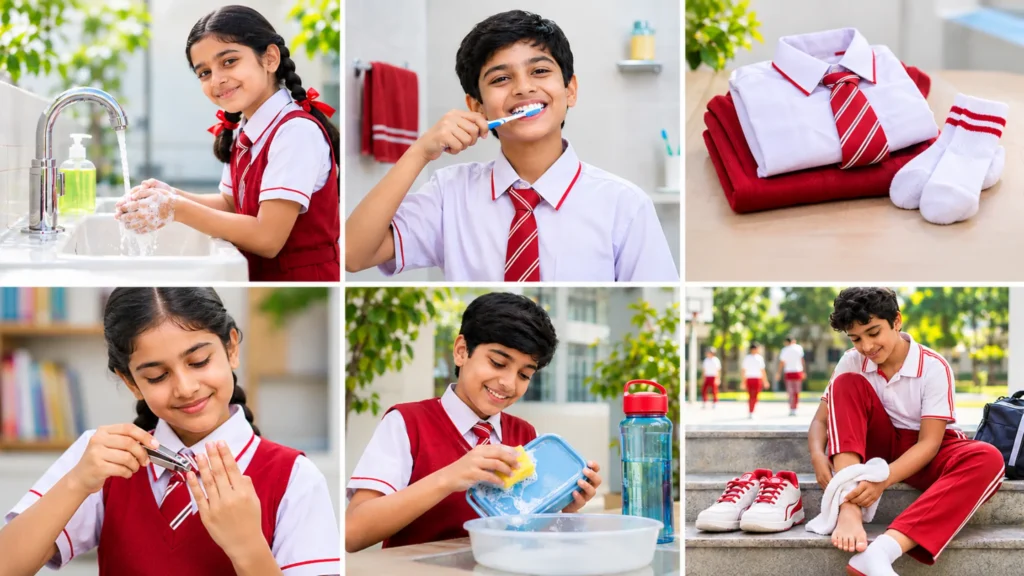
Here are 12 practical ways to take care of different hygiene needs during a normal school day.
1. Wash Your Hands With Soap and Water
Hands touch many surfaces, and germs can reach your mouth, nose or eyes when you touch your face. Wash your hands before eating, after using the toilet, after coughing or sneezing into your hands and whenever they are dirty.
To wash them properly:
- Wet your hands with clean running water.
- Apply soap and rub your hands together.
- Clean your palms, backs of hands, between fingers and under nails.
- Scrub for at least 20 seconds.
- Rinse well and dry your hands.
If soap and water are unavailable, hand sanitiser with at least 60% alcohol can help when hands are not visibly dirty. Young children need adult supervision when using it.
2. Brush Your Teeth Twice a Day
Plaque builds up on teeth and can cause cavities. Brush every morning and before bed with a soft toothbrush and fluoride toothpaste. Spend about two minutes cleaning the front, back and chewing surfaces.
Brush gently to avoid hurting your gums. Spit out excess toothpaste instead of rinsing straight away with lots of water.
Children under three generally need a rice-sized smear of fluoride toothpaste. Those aged three to six usually need a pea-sized amount and adult supervision. Replace worn toothbrushes, usually every three to four months, and ask a dentist about suitable check-ups.
3. Bathe Regularly and Keep Your Body Clean
Sweat, dirt and skin oils build up during the day. Wash your body with clean water and mild soap, paying attention to your underarms and skin folds. Clean the outside of your private areas gently, without harsh or heavily scented products.
Wash your face gently too. If you have pimples, avoid picking at them because this can irritate your skin.
How often you need to bathe depends on the weather, your activities and your skin. Dry yourself with a clean towel afterwards.
4. Wear Clean Clothes and School Uniforms
Clothing collects sweat and dust. Put on fresh underwear and socks every day, changing them sooner if they become wet or dirty.
Wash your school uniform when it is sweaty or soiled. Follow the label’s care instructions and let clothes dry completely before storing them. Damp fabric may develop a bad smell or mould.
Keep worn clothes in a separate laundry basket.
5. Keep Your Nails Short and Clean
Dirt can get trapped beneath fingernails after outdoor games, gardening or craft work. Trim nails regularly with a clean nail cutter and smooth rough edges with a file.
Avoid biting nails or pulling at the skin around them. These habits can cause small cuts that may become infected.
If dirt remains under a nail, remove it gently with a soft nail brush. Never use a sharp object. Younger children should ask an adult to help with trimming.
6. Take Care of Your Hair and Scalp
Your scalp produces natural oils, but extra oil and sweat can make hair feel greasy. Wash your hair with a suitable shampoo when needed. Some students need more frequent washing than others, so daily shampooing is not a rule for everyone.
Massage shampoo into your scalp with your fingertips and rinse well. Comb carefully to remove tangles without pulling.
If itching, redness or heavy flaking does not go away, tell a parent or healthcare professional.
7. Follow Proper Toilet Hygiene
Shared school toilets should be left clean for the next person. Clean yourself properly, flush after use and follow the washroom’s instructions for disposing of toilet paper.
For girls and others with female anatomy, wiping from front to back after using the toilet helps keep germs away from the urinary opening.
Never flush pads, tampons or other menstrual products. Wash your hands before leaving. If soap, water or a toilet is not working, tell a teacher or responsible adult so the problem can be fixed.
8. Cover Your Mouth When Coughing or Sneezing
Coughs and sneezes release droplets that may carry germs. Cover your mouth and nose with a tissue, then put it in a bin. If you have no tissue, use your bent elbow instead of your hands.
Turn away from classmates when possible. If you feel unwell at school, tell a teacher. Follow school rules and medical advice about staying home when you have an illness that could spread to others.
9. Avoid Sharing Personal Hygiene Items
Sharing pencils is different from sharing things that touch your skin or mouth. Keep toothbrushes, towels, combs, razors and lip balm for personal use. Sharing them may transfer germs or skin problems.
Label your belongings for school trips and overnight camps. If you forget something essential, ask a parent or teacher for help instead of borrowing another student’s personal item.
10. Keep Your Lunch Box and Water Bottle Clean
Food crumbs can remain inside a lunch box, while bottle lids and drinking spouts can collect dirt. Wash reusable lunch boxes after each use with dish soap and clean water. Clean corners, seals and small compartments carefully.
Wash your water bottle daily, using a bottle brush if necessary. Rinse both items thoroughly and let them dry before closing them.
Check for cracks or damaged seals. Replace a container if it can no longer be cleaned properly.
11. Practise Good Menstrual Hygiene
Periods are a normal part of growing up, not something to feel embarrassed about. Students who menstruate need suitable products, clean facilities and accurate information.
Options include pads, period underwear, tampons and menstrual cups. Follow the instructions for the product you use. Change pads regularly, especially when soaked. Change tampons every four to eight hours and never leave one in for more than eight hours.
Wash your hands before and after handling menstrual products. Wrap used disposable products and place them in a suitable bin, never in the toilet.
12. Maintain Hygiene After Sports and Physical Activities
Physical education classes can leave sportswear, shoes and protective equipment damp. Change out of wet sportswear when possible and let sports shoes air out instead of leaving them in a closed bag.
Dry your feet carefully, especially between the toes, before putting on fresh socks. Clean helmets, pads and other reusable equipment according to their care instructions.
Sports are also an important part of school life. Read more about the importance of sports and games for students.
Simple Daily Hygiene Checklist for School Students
Use this quick checklist to remember what needs attention at different times, without following a long set of instructions.
| Time | Quick check |
| Before school | Teeth brushed, clean uniform ready and personal supplies packed |
| At school | Hands cleaned at the right times and shared facilities used responsibly |
| After school | Food containers washed and used belongings checked |
| Before bed | Evening care finished and tomorrow’s essentials prepared |
How Can Parents and Teachers Encourage Good Hygiene Habits?
Adults can help by showing children how to complete tasks rather than only telling them what to do. Give younger students simple responsibilities and increase them as they become more independent.
Teachers should explain expectations kindly, without embarrassing anyone who forgets. Schools also need clean water, soap, working toilets and suitable bins.
Conclusion
Good personal hygiene is about practical care, not perfection. When students have clear information and the right facilities, they can make sensible choices for themselves and the people around them.
At Alok Sansthan, we value education that supports personal growth alongside classroom learning.
Frequently Asked Questions
1. At what age should children start learning personal hygiene?
Children can start with simple tasks at an early age. Adults should supervise activities that require care or sharp tools until the child can manage them safely.
2. What should students keep in a school hygiene kit?
Tissues, a clean handkerchief and any personal care products they need are useful. Check school rules before packing liquids or other supplies.
3. Can too much soap irritate your skin?
Yes. Frequent washing with harsh products may cause dryness or irritation. Choose gentle products and ask a healthcare professional if skin problems continue.
4. When should students seek help for unusual body odour?
Body odour can change during puberty. If a strong or unusual smell persists despite normal cleaning, talk to a parent or healthcare professional.