

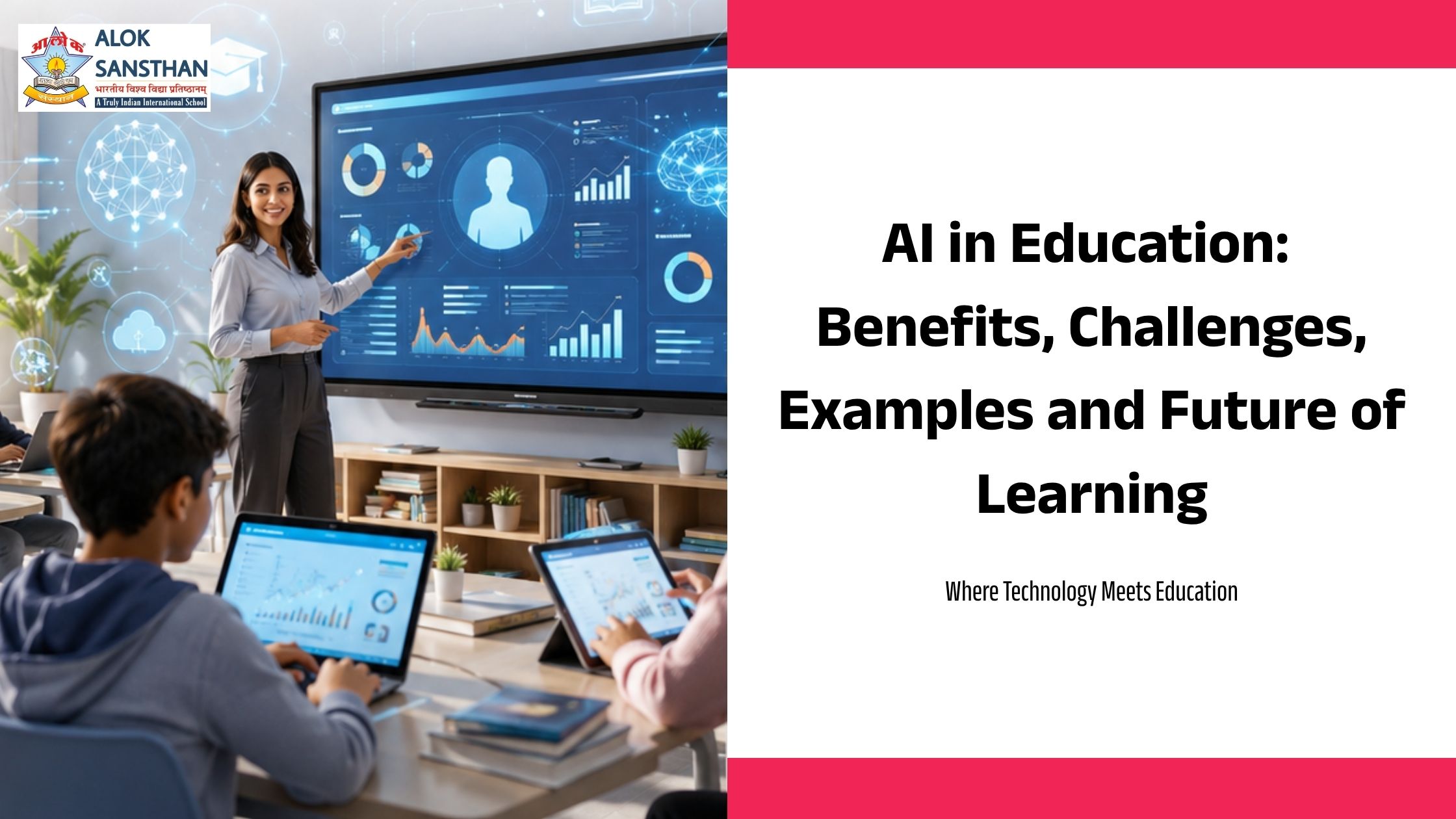

Technology changes how we live every single day. Now it is changing how we learn. Walk into a modern classroom and you will see something amazing happening. Blackboards are turning into smart screens. Books are becoming interactive digital experiences. At the center of all this change is AI in Education. This powerful technology is completely reshaping how schools operate today. It is not just a passing trend. Artificial Intelligence in Education is becoming a permanent part of our daily lives.
Many people feel nervous when they hear about computers taking over classrooms. But what exactly does this mean for your child? Are robots taking over schools completely? Will human teachers lose their jobs? These are common questions parents and educators ask every day. The truth is much more comforting and exciting. Artificial intelligence is here to help us. It makes learning much easier for students. It makes teaching much smoother for educators. It brings a new level of excitement to school education.
In this complete guide, we will explore everything you need to know about this topic. We will look at benefits, tools, challenges and future trends. Whether you are a student trying to study better, a teacher looking to save time or a parent wanting to understand modern schooling, this article is written exactly for you. Let us dive deep into the exciting world of digital learning and see what our future holds.
What is AI in Education?
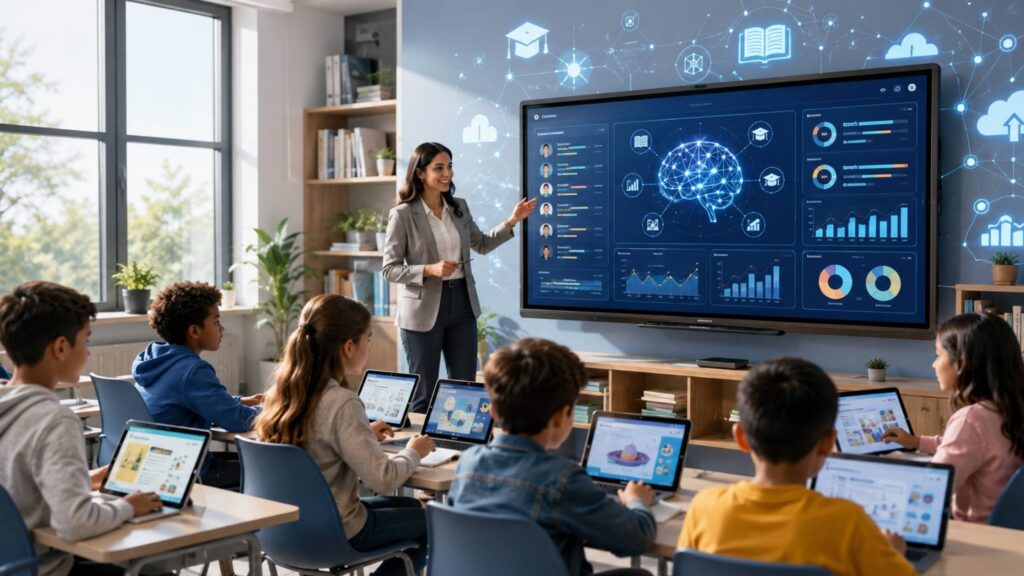
AI in Education means using artificial intelligence to improve teaching, learning and school management. It helps students learn better, supports teachers with routine tasks and creates more personalized learning experiences.
Think about how video streaming applications suggest movies you might like. The application learns from what you usually watch. AI in Learning works in a very similar way. It looks at how a student learns and then suggests the best ways to help them improve constantly.
Imagine buying clothes for a special event. You can buy a standard shirt from a regular shop. It might fit well or it might be too loose. This is exactly like traditional schooling where everyone gets the exact same standard lesson. Now imagine going to a professional tailor who measures you carefully and makes a shirt perfectly for your body. This is what artificial intelligence does for learning. It creates a custom study plan that fits a students exact personal needs perfectly.
If a student struggles with math fractions, the artificial intelligence system notices this problem immediately. It then provides extra practice on fractions until the student understands them completely. In simple words, it is like having a super smart assistant in the classroom. This assistant never gets tired. It can help thousands of students at exactly the same time.
Why is AI Important in Education?
The world is moving incredibly fast today. Students need to prepare for jobs that do not even exist yet. The importance of AI in education lies in its ability to prepare students for this highly digital future. Schools can no longer rely only on old traditional teaching methods.
Traditional teaching often treats every student exactly the same. A teacher stands in front of thirty students and delivers one single lesson. But every child is very different. They learn at completely different speeds. Some grasp complex numbers quickly but struggle with big words. Others write beautifully but find science extremely difficult to understand.
Artificial Intelligence brings a massive positive change to this old system. It allows schools to treat every student as a unique individual. When schools use AI based learning, they can give every child exactly what they need to succeed in life. This makes education fairer and much more effective for everyone involved.
Furthermore, teachers around the world are often overworked and highly stressed. They spend countless hours checking notebooks, making reports and planning daily lessons. Artificial intelligence easily handles these repetitive manual tasks. This gives teachers much more free time to actually talk to their students. When teachers have more free time, they can offer better emotional support and career guidance. Educational technology is critically important because it brings the human focus back to teaching by removing the boring daily paperwork.
Benefits of AI in Education

The benefits of AI in education reach everyone involved in the learning journey. Let us look closely at how it helps students, teachers, parents and schools.
Benefits for Students
First, artificial intelligence provides truly personalized learning paths. It changes the difficulty of test questions based on how well the student is doing at that exact moment. If a student learns extremely fast, the system gives harder problems to keep them challenged. If they need more time to understand a concept, it slows down and gives easier examples. This ensures nobody ever gets left behind in class.
Second, it offers constant reliable help. Students can ask questions to smart AI chatbots anytime they are studying at home late at night. They never have to wait for the next school day to get a simple doubt cleared by a teacher.
Third, it makes learning highly engaging. Educational AI games and visual quizzes keep students excited about their daily studies. Learning feels less like a boring chore and more like an exciting puzzle to solve.
Benefits for Teachers
Teachers get a huge boost in their daily productivity. Teacher productivity improves greatly because AI tools for education can grade objective tests instantly. A hardworking teacher does not need to spend their entire weekend marking exam papers anymore.
These smart tools also help create brilliant lesson plans very quickly. Instead of writing a quiz from scratch, a teacher can ask a smart tool to generate great questions based on the daily textbook chapter.
Artificial intelligence also acts as an early warning system in the active classroom. It tells the teacher if a specific student is falling behind before it becomes a major educational problem. This allows the teacher to step in and help the child immediately.
Benefits for Parents
Parents always want to know exactly how their precious children are performing at school. Artificial intelligence gives parents highly detailed progress reports weekly or monthly. These reports do not just show final exam marks. They show exact weak points and strong points in daily learning activities.
This helps parents understand exactly where their child needs extra help at home. It makes parent teacher meetings much more productive because everyone has clear data to discuss openly. It also saves parents significant money because they might not need to hire expensive private tutors anymore.
Benefits for Schools
For school management teams, artificial intelligence saves incredible amounts of money and valuable time. It can manage complex school timetables perfectly without any human errors. It predicts student attendance trends accurately over time. It even helps in planning safer and much faster school bus routes for children.
Schools can use large amounts of collected data to see which teaching methods work best across different classes. This helps the school principal make much better decisions to improve the overall quality of education continuously.
Benefits for Students vs Teachers
| Beneficiary | Main Advantages | Practical Use Case |
| Students | Personalized learning, constant support, engaging study materials | Using a virtual tutor for late night math homework help |
| Teachers | Time saving, automated grading, deep student insights | Automatically generating a twenty question science quiz in seconds |
How is AI Used in Schools? Real Examples of AI in Education
It is very easy to talk about modern technology in theory. But how does it actually work inside a real physical classroom? Here are some clear AI applications in education that modern schools use right now.
Personalized Learning Platforms
Many schools use smart software that adapts completely to the student. As the student answers questions on a tablet device, the software learns their personal strengths rapidly. It then builds a custom study path automatically. Two students sitting next to each other might see completely different questions based on their personal skill levels.
Smart Assessments
Old paper tests only told you if an answer was right or wrong. Smart assessments tell you exactly why it was wrong. They show students the precise step where they made a simple mistake in a long math problem. This helps students learn from their personal errors immediately.
Language Learning Apps
Smart applications can listen to a student speak a new foreign language clearly. They correct poor pronunciation instantly using voice recognition. They give helpful spoken feedback just like a real human language coach would do in a private class.
Homework Support Systems
Artificial intelligence helps students figure out difficult homework assignments at home. It does not just give the final correct answer because that would be cheating. Instead it guides the student step by step until they solve the complex problem themselves.
Smart Attendance Systems
Some modern schools use smart cameras with safe facial recognition to mark daily attendance. As students walk into the classroom, they are marked present automatically. This saves teachers up to fifteen minutes every single morning.
AI Chatbots for Admissions
Schools put smart chatbots on their official websites to help visitors. These bots answer common questions from anxious parents about admission dates, school fees and uniform rules. They work day and night without ever needing a coffee break.
Virtual Tutors
Students who need extra help can use virtual tutors anytime they want. These are highly advanced computer programs that act exactly like human teachers. They explain difficult concepts very patiently and never get angry if a student asks the same simple question ten times.
Learning Analytics Dashboards
Schools collect massive data on student performance throughout the entire year. Artificial intelligence looks at this massive data to find hidden patterns quickly. It might find that most students fail a specific science topic every single year. The school can then change how they teach that specific topic to make it much easier for future students.
Popular AI Tools Used in Education
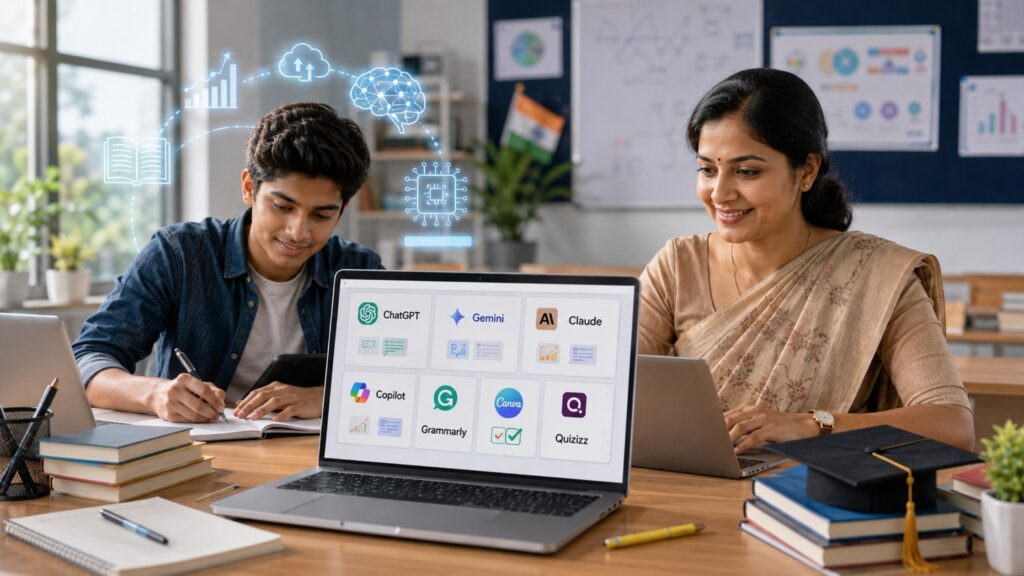
Many great software programs are making the smart AI classroom a reality today. Here is a detailed look at some amazing tools that are very popular among students and teachers worldwide.
ChatGPT
ChatGPT is extremely famous everywhere. Students use it to understand very complex topics easily. If a student does not understand space gravity, they can ask ChatGPT to explain it like they are ten years old. Teachers use it frequently to write emails to parents, draft morning assembly speeches and generate fresh creative lesson ideas.
Google Gemini
Google Gemini is another very powerful smart tool. It connects perfectly well with other Google applications like Docs and Slides. Teachers use Gemini to summarize long boring articles for their young students. It is very fast and incredibly helpful for quick internet research projects.
Microsoft Copilot
Copilot works directly inside Word and PowerPoint. A busy teacher can use Copilot to turn a simple plain text document into a beautiful colorful presentation in just a few short minutes. It saves a massive amount of daily preparation time for educators.
Claude
Claude is an AI assistant that helps students understand difficult topics in simple language. Teachers can use it to create lesson plans, learning materials and classroom activities. It focuses on clear explanations that help students learn instead of just giving direct answers.
Grammarly
Grammarly helps students write much better English essays. It checks basic spelling and grammar properly. But it also does much more than that. It suggests better vocabulary words and helps make long paragraphs clearer. It actually teaches students how to improve their core writing skills over time naturally.
Canva AI
Canva is a very popular design tool online. Its new artificial intelligence features help students create amazing visual posters for school science projects. Teachers use it heavily to design beautiful fun worksheets that keep younger students highly engaged in daily learning.
Quizizz AI
Quizizz allows teachers to make interactive fun tests easily. With its new smart features, a teacher can upload a boring PDF document and the tool will automatically create a multiple choice quiz from it instantly.
What are the Challenges of AI in Education?
While digital learning is very exciting today, it is definitely not perfect. There are several serious AI challenges in education that schools must solve carefully before moving forward.
Privacy and Data Security
Educational technology collects a huge amount of private data about children. This sensitive information includes their exam grades, personal learning habits and sometimes even their facial features. Keeping this data perfectly safe from bad internet hackers is a major challenge. Schools must ensure they protect student privacy tightly at all times.
Bias in Artificial Intelligence
Computers learn from old data created by regular humans. Because humans naturally have biases, the computer can accidentally learn these bad biases too. Sometimes artificial intelligence might grade certain styles of writing unfairly. We must constantly check these smart systems to ensure they treat every single student equally and fairly.
The Risk of Cheating
Generative AI in education makes it incredibly easy to cheat on daily homework. A student can secretly ask a smart tool to write an entire history essay for them. Teachers are finding it very hard to know if a real human or a fast computer wrote an assignment. Schools urgently need new strict rules to handle this growing issue properly.
Increased Screen Time
Using more digital technology means staring at bright screens for much longer hours daily. Too much daily screen time can harm a childs eyes and reduce their physical outdoor activity. Schools must find a very healthy balance between digital learning and physical playground play.
The Digital Divide
Not every student has a fast modern computer or good internet at their home. If schools rely too much on advanced educational technology, poor students might get left behind completely. We must strongly make sure that all students have perfectly equal access to these powerful new learning tools.
Teacher Training Issues
Many older experienced teachers are not very comfortable with brand new digital technology. Asking them to use complex artificial intelligence systems daily can be highly stressful. Schools must spend proper money and adequate time to train all teachers patiently.
Can AI Replace Teachers?
No, AI cannot replace teachers. While artificial intelligence is excellent at providing information and grading tests instantly, it completely lacks human empathy, emotional intelligence and the deep ability to truly inspire a child.
This is one of the most common worries in society today. People see how smart modern computers are becoming and think human teachers will soon lose their jobs entirely. This will absolutely not happen ever. Teaching is much more than just sharing plain facts from a thick book.
A cold machine cannot tell if a young student is crying simply because they had a bad morning at home. A computer cannot give a comforting smile or a proud high five. A robot cannot inspire a child to follow their biggest dreams. Teachers provide crucial emotional support that is absolutely vital for healthy student learning.
Instead of replacing teachers, artificial intelligence will act as a very helpful assistant. It will handle the boring daily paperwork so teachers can spend much more time doing what they do best. They will connect deeply with their students and guide them towards a very bright future.
Traditional Learning vs AI Supported Learning
| Feature | Traditional Learning | AI Supported Learning |
| Pace of Learning | Same exact pace for the whole class | Adjusted carefully to each individual student |
| Teacher Role | Delivers long lectures and grades papers manually | Acts as a mentor while technology handles basic grading |
| Feedback | Takes days or weeks after a written test | Provides instant feedback right after answering |
| Focus | Memorizing plain facts for exams | Understanding deep concepts and critical thinking |
How Parents Can Guide Children Using AI
Many parents feel confused about how to help their children use these new digital tools at home. It is very important for parents to stay involved.
First, parents should talk openly with their children about the difference between getting help and cheating. Using a smart tool to explain a difficult math formula is great learning. Using it to write a complete school essay is wrong.
Second, parents should monitor daily screen time closely. Even if a child is using a great educational application, staring at a bright screen for five hours is not healthy. Parents should always encourage reading physical books and playing outside.
Third, parents can actually learn alongside their children. Ask your child to show you how they use their favorite digital learning application. When parents show genuine interest, children feel much more supported in their daily educational journey.
What is the Future of AI in Education?
The future of education looks very different from the classrooms we see today. We will surely see even more advanced technologies in the coming few years.
Soon we might have fully immersive virtual reality smart classrooms. A history teacher could use artificial intelligence to create a realistic virtual ancient Rome. Students could virtually walk through the old streets and talk to digital historical figures. This will make learning history incredibly fun and memorable.
Adaptive learning systems will become even smarter soon. Systems will not just look at right or wrong test answers. They might safely use web cameras to read a students facial expressions while studying. If the computer sees the student looks very confused, it will automatically pause and explain the hard topic again differently.
AI in Indian Education
In countries with huge populations like India, these digital tools are massive game changers. AI in Indian education is growing very rapidly right now. Many rural village schools face a big shortage of good experienced teachers. Smart learning applications on cheap mobile phones are strongly helping village students access the exact same high quality of education as rich city students. The Indian government is also promoting smart digital learning initiatives widely to bridge the gap between urban and rural areas completely.
How Can Schools Use AI Responsibly?
Schools can use AI responsibly by protecting student private data securely, avoiding unfair bias, training teachers properly and ensuring technology is used strictly to assist learning rather than replace human teaching.
Responsible AI means using powerful technology in a very safe and highly ethical way always. Schools must teach young students how to use these tools properly for good purposes. Students urgently need to learn that artificial intelligence is just a helper. It is not a lazy shortcut to skip hard honest work. They must develop strong critical thinking skills to always question the information a computer gives them.
Conclusion
The beautiful world of education is transforming completely right before our eyes. AI in Education is no longer just a futuristic science fiction dream. It is happening beautifully right now in thousands of classrooms all around the globe.
We have clearly seen how it offers truly personalized learning for struggling students and incredible time saving tools for hardworking teachers. While serious challenges like data security and homework cheating definitely exist, the massive benefits far outweigh the temporary risks. The ultimate goal is absolutely not to remove humans from the modern classroom. The true goal is to give humans much better digital tools so they can teach and learn more effectively together.
As we move confidently forward, schools, caring parents and dedicated teachers must work together closely. We need to embrace exciting educational technology fully while ensuring it is used safely and very responsibly. By doing this together, we can successfully create a bright future where every single student has the perfect opportunity to reach their absolute full potential.
Looking for a school that prepares students for the future? At Alok Sansthan, we combine quality education, experienced faculty and modern teaching methods to help every child learn, grow and excel.
Frequently Asked Questions
1. What is AI in education?
AI in education is the use of artificial intelligence to improve teaching, personalize learning and automate routine school tasks.
2. Can AI replace teachers?
No. AI supports teachers by saving time and improving learning, but it cannot replace human guidance and emotional support.
3. What are the benefits of AI in education?
AI offers personalized learning, instant feedback, automated grading, better student engagement and improved classroom management.
4. Which AI tools are commonly used in education?
Popular AI tools include ChatGPT, Google Gemini, Claude, Microsoft Copilot, Grammarly, Canva AI and Quizizz AI.
5. Is AI good for students?
Yes. When used responsibly, AI helps students learn faster, understand difficult topics and receive personalized academic support.