

Nobody wakes up one morning and suddenly becomes a great communicator. It takes time. It takes some awkward silences, a few conversations that did not go well and a lot of honest self-reflection.
But here is something most people get wrong — they think communication is a talent. Like either you have it or you do not. That is simply not true. Learning how to improve communication skills is something anyone can do, at any age, at any stage of life.
Whether you stumble while speaking in front of a group, struggle to say exactly what you mean or just want to sound more confident in daily conversations — this guide is for you. These are not vague motivational tips. These are real, practical things that actually make a difference.
Why Communication Skills Matter More Than People Realize
Here is a small test. Think of the last time something went wrong in a relationship — at home, at school or at work. Now think honestly about whether poor communication had anything to do with it. Nine out of ten times, it does.
Communication skills touch everything. How you express a point in class. How you handle a disagreement with a friend. How you come across in a job interview or a presentation. Even how you write a simple message — tone and clarity matter there too.
Students with strong speaking skills tend to participate more freely in classrooms. Professionals who can express ideas clearly tend to grow faster. And in personal life, people who communicate well simply have fewer unnecessary conflicts.
Body language, active listening, tone, vocabulary — it all falls under this one umbrella. And yes, all of it can be trained.
Common Communication Problems People Actually Face
Before jumping into tips, let us be honest about what gets in the way for most people.
Speaking too fast is a big one. Nervousness does that to people — the brain races and the mouth tries to keep up. Filler words like “umm”, “so”, “like” and “basically” creep in without warning. Some people avoid eye contact without realizing it. Others listen only halfway because they are already preparing their response in their head.
And then there is public speaking. Even intelligent, articulate people go completely blank the moment there is an audience. That fear is real and extremely common.
Knowing your own weak spots is step one. Everything else builds from there.
10 Simple and Effective Tips to Improve Communication Skills
1. Start by Actually Listening
Most people treat listening as just waiting for their turn to speak. That is not listening. Real active listening means giving the other person your complete attention — no phone, no half-formed responses brewing in your head, just genuine focus on what they are saying.
Try it in your next conversation. Just listen. Do not interrupt. Do not finish their sentence. Let them complete their thought and then respond. You will notice something interesting — your response becomes much better because it is actually based on what they said, not what you assumed they were going to say.
Conversation skills improve dramatically when listening gets better. It is connected.
2. Speak a Little Every Single Day — Out Loud
This tip sounds too simple to matter. But people skip it all the time. Communication is a physical skill as much as a mental one. Your voice, your pacing, your ability to think while speaking — all of it needs regular practice.
Talk to yourself while getting ready. Describe your plans for the day. Narrate what you are doing while cooking. Call someone and have a real conversation instead of sending voice notes. Read a paragraph out loud from any article and pay attention to your pace and clarity.
Five minutes of speaking practice daily adds up faster than you expect. Communication practice has to be consistent, not intense.
3. Fix Your Body Language First
Before you even open your mouth, your body is already speaking. Crossed arms, a bent posture, avoiding eye contact — these send signals that undercut whatever you are saying, even if the words are perfect.
Stand or sit upright without being stiff. Face the person you are talking to. Let your hands move naturally when you speak — forced gestures look awkward but natural ones actually help you communicate better. And eye contact does not mean staring someone down; it means staying present and engaged.
Record a short video of yourself talking about anything. Watch it without sound. What does your body say? That exercise is uncomfortable but genuinely useful.
4. Read — Even Just a Little Every Day
Strong verbal communication is deeply connected to how much language you are absorbing. People who read regularly — even just articles or short blogs — pick up sentence structures, vocabulary and ways of explaining ideas that eventually start showing up in how they speak.
You do not need to read novels. A few well-written articles a week work just fine. News, blogs on topics you enjoy, even good social media threads — language input is language input. Over time it quietly improves how you express yourself in conversations.
5. Slow Down When You Speak
Speed is one of the most common problems in communication and one of the easiest to fix. When people get nervous or excited, they rush. Words get swallowed. The listener struggles to follow. Confidence takes a hit because even the speaker can hear themselves stumbling.
The fix is simple in theory — slow down deliberately. Pause after a sentence. Let a thought land before moving to the next one. Speak like you are making sure the other person is following, not like you are racing to get through everything.
Try reading a paragraph out loud. At every full stop, pause for two full seconds. It will feel strange at first. But your words will carry so much more weight.
6. Build Confidence One Small Moment at a Time
Nobody improves their speaking confidence by waiting until they feel ready. That moment usually never comes on its own. Confidence in communication builds through repeated small actions — answering a question in class, introducing yourself to someone new, voicing an opinion in a group even when you are slightly unsure.
Each of those moments trains something. And they stack up. What felt genuinely terrifying three months ago starts feeling manageable. Then it starts feeling normal.
Do not look for a big dramatic leap. Look for the next small situation where you can push yourself just slightly out of comfort. That is where confidence building actually happens.
7. Grow Your Vocabulary Without Forcing It
There is a wrong way and a right way to build vocabulary. The wrong way is memorizing word lists. The right way is noticing new words in context, looking them up immediately and trying to use them in a sentence within a day or two.
Context is everything. When you learn a word by seeing it in a sentence, in a real piece of writing, it sticks. When you cram a list, most of it disappears within a week.
Better vocabulary does not mean using complicated words. It means having more choices. Instead of saying something was “bad”, you might say it was discouraging, counterproductive or poorly timed — depending on exactly what you mean. Precision in language is what makes communication genuinely effective.
8. Face Public Speaking Head On
Avoiding public speaking because it is scary only makes the fear stronger. Every time you sidestep it, that fear gets a little more comfortable sitting in your chest.
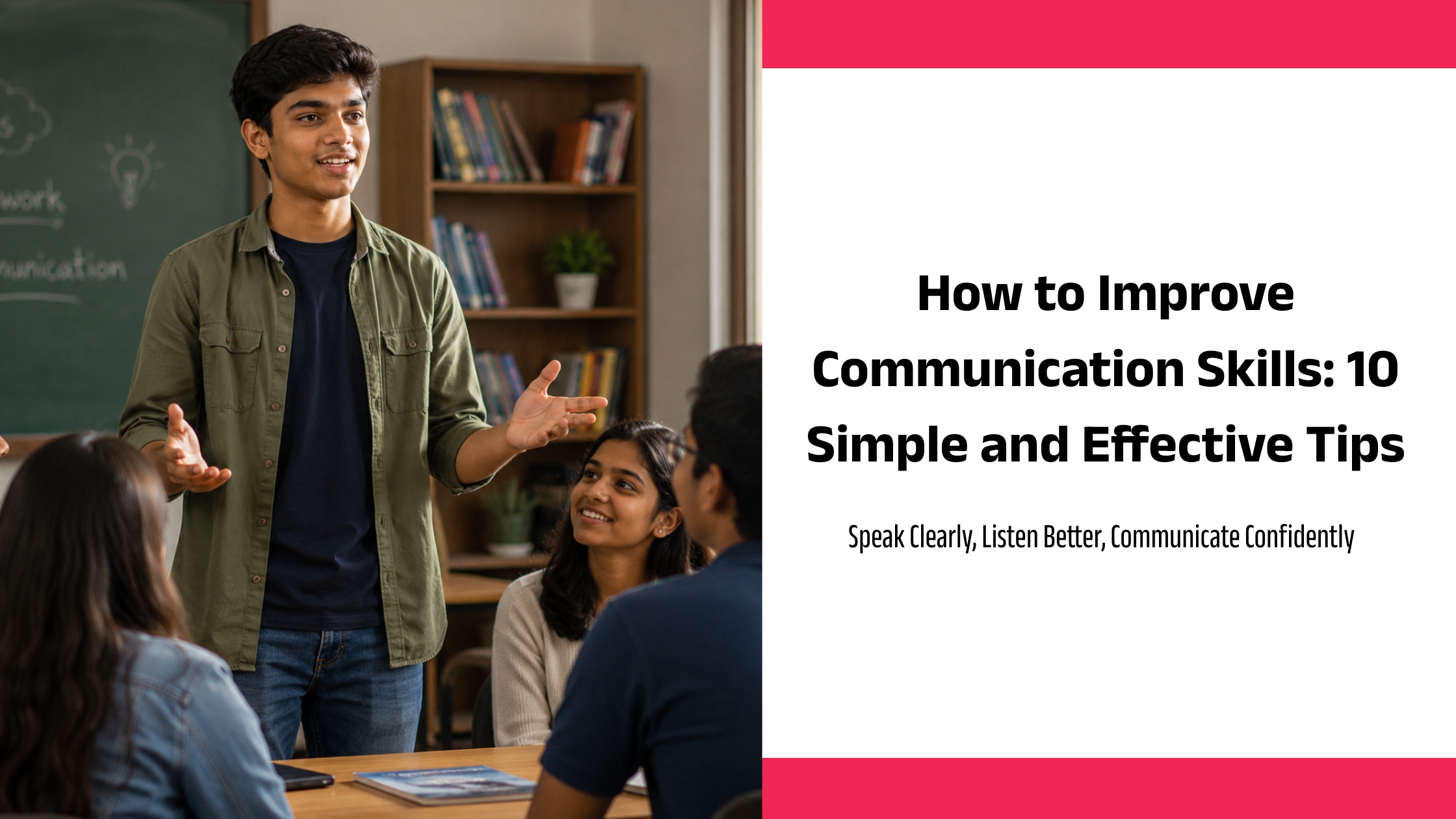
The only real way through it is practice in front of actual people. Start wherever the bar feels manageable. Speak up in a small group. Share something in a family discussion. Try a debate or elocution event at school. If you can access it, a group like Toastmasters is genuinely excellent for this.
Public speaking skills do not require a stage and a microphone. Two people watching you speak is still public speaking. And every time you do it, the next time is slightly less daunting.
9. Cut the Filler Words
“Umm”, “like”, “basically”, “you know”, “so yeah” — filler words are not evil but they weaken communication. They signal uncertainty even when you are not actually uncertain. And they disrupt the rhythm of what you are saying.
Record yourself speaking for two or three minutes on any topic. Then count the fillers. Most people are genuinely surprised by how many appear. Awareness is usually enough to start reducing them.
The fix is not to speak without pausing. The fix is to replace the filler with actual silence. A pause is not awkward — it is composed. It gives the listener a moment to absorb what you just said.
10. Have More Real Conversations
Books and tips and videos on communication are all useful. But nothing replaces the actual thing. Real conversations with real people, in real time, where you have to think on your feet and respond to what actually comes up — that is where improvement happens fastest.
Talk to people outside your usual group. Have a conversation about something you disagree on, politely. Ask a teacher or senior a genuine question and actually engage with the response. These interactions build something that no practice session in a mirror fully replicates.
Make conversation a practice, not a performance.
How Communication Skills Help Students and Professionals
For students, classroom communication is directly linked to engagement and performance. Speaking up, asking the right questions, presenting work clearly and working in a group without friction — all of it requires communication that actually works. Students who develop these skills early carry a significant advantage into higher education and beyond.
For professionals, it is more obvious but equally important. The ability to make a point clearly in a meeting, write a clean and direct email, handle conflict without making it worse or pitch an idea convincingly — these are career skills as much as communication skills. Personality development in a professional setting is almost impossible without improving how you communicate.
In both worlds, the core need is the same: be understood, be heard and connect without unnecessary confusion.
Mistakes That Are Quietly Hurting Your Communication
Some habits damage communication without people realizing. Interrupting others before they finish. Writing long complicated messages when a short clear one would work better. Assuming the other person understood when you never actually checked. Getting so focused on your own words that you miss how the other person is reacting entirely.
Another big one — avoiding difficult conversations and letting things build up. That never ends well. Strong communicators do not avoid hard talks. They just handle them better.
These are not personality problems. They are patterns. Patterns can change.
What Genuinely Strong Communication Skills Give You
Better relationships, for one. When people feel properly heard and understood around you, everything runs smoother. Fewer misunderstandings. Less conflict that spirals out of proportion.
Professionally, your presentation skills and your ability to lead conversations directly affect how far you go. Ideas that are expressed clearly get taken seriously. Ideas that come out muddled get overlooked, even if they are brilliant.
In social situations, you feel more at ease. Conversations do not feel like something to survive — they become something you actually enjoy. And your overall personality development reflects all of it, in ways that show up naturally rather than feeling performed.
Conclusion
There is no shortcut to better communication. But there is a path, and it is pretty straightforward — practice consistently, pay attention to your habits and stop waiting for the perfect moment to start.
Pick one or two things from this blog that honestly apply to your situation. Work on those first. Do not try to fix everything at once. Small consistent effort over weeks and months is what creates real change in how you speak and connect.
Better communication is not about becoming a different person. It is about becoming a clearer version of who you already are.
One last thing —
If you are a student trying to build more confidence, a professional wanting to communicate with more impact or simply someone tired of feeling like words let you down in important moments — start today. Not tomorrow. Pick one tip and use it in your next real conversation.
Growth in communication, in confidence and in personality always starts with a single step. Take yours now.
Ready to take the next step in your learning journey?
At Alok Sansthan, we focus on building strong communication skills, confidence, and overall personality development.
Join a learning environment where students grow with the right guidance and values.
Explore admissions at Alok Sansthan today and start your journey towards a better future.
Frequently Asked Questions
Q1. How can I improve my communication skills quickly?
Practice active listening, speak daily out loud, and focus on slowing your speech.
Q2. Can communication skills be learned or improved?
Yes, communication is a skill that can be improved with regular practice and awareness.
Q3. What is the biggest mistake in communication?
Not listening properly and focusing only on what to say next instead of understanding.
Q4. How do I become confident while speaking?
Start small—speak in daily conversations and gradually take part in group discussions.
Q5. Why are communication skills important for students?
They help students perform better in studies, presentations, and build confidence in life.