


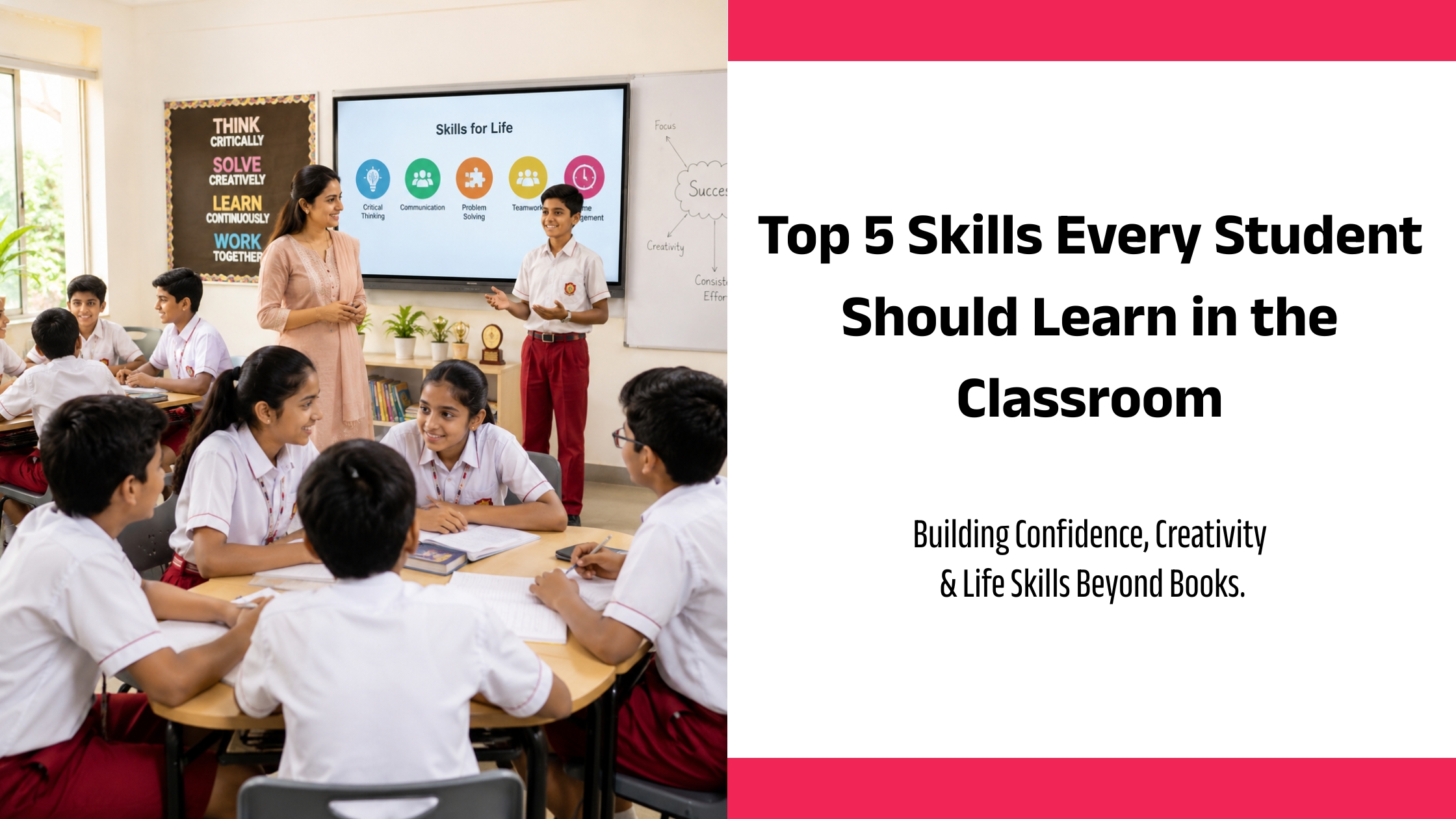
School is not just about textbooks and exams. It never was. What a child learns between those four walls goes far beyond chapters and marks. Real growth happens when students pick up skills that actually help them in life. And that is exactly what good classrooms are built for. These are the skills every student should carry with them – not just through school but through everything that comes after. Let us talk about the top 5 that matter most.
1. Critical Thinking – Learning to Question and Analyse
Most students are taught to memorise answers. But very few are taught to question them. That is where critical thinking makes all the difference. It is one of the most important classroom skills for students that a school can build.
When a child learns to think critically, they stop accepting everything at face value. They start asking why. They look at a problem from different angles before jumping to a solution. This habit – once built – stays with them forever.
Think about a simple classroom activity like a group debate. One student argues for something. Another argues against it. Both have to back their points with logic and facts. That one activity builds more thinking muscle than ten chapters of rote learning ever could.
Critical thinking also helps students perform better in exams. When a question is tricky or unfamiliar, a student who thinks critically does not panic. They break it down, analyse what is being asked and work toward an answer step by step. This skill is not just useful in school – it is useful in every job interview, every business decision and every real life challenge ahead.
2. Communication Skills – Saying What You Mean Clearly
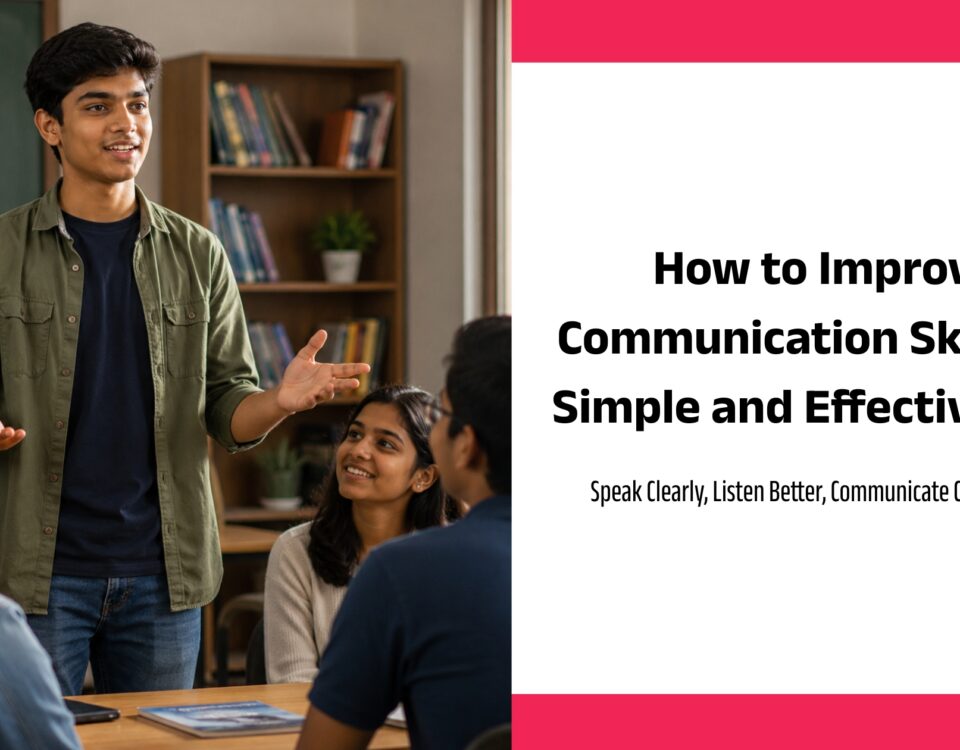
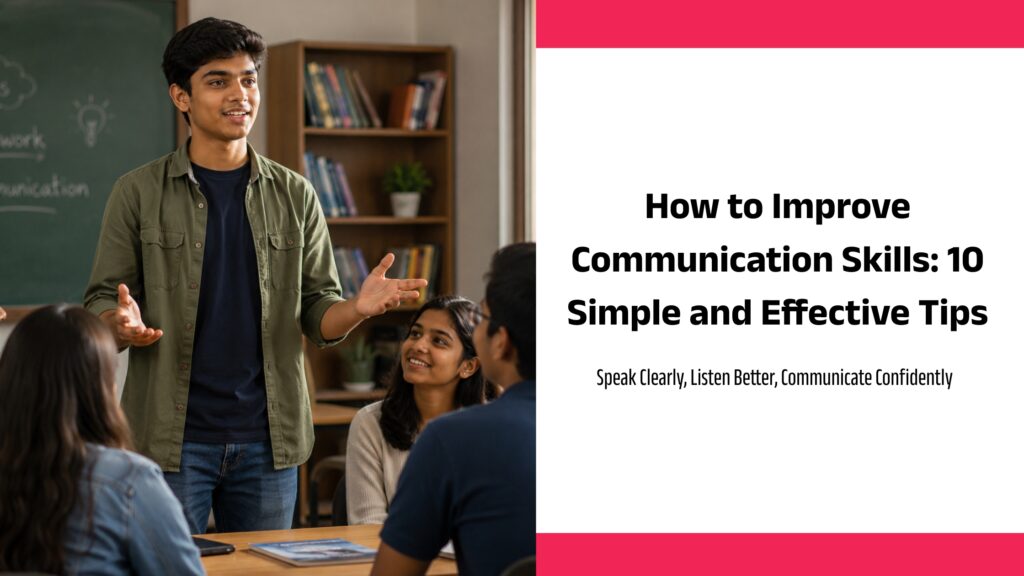
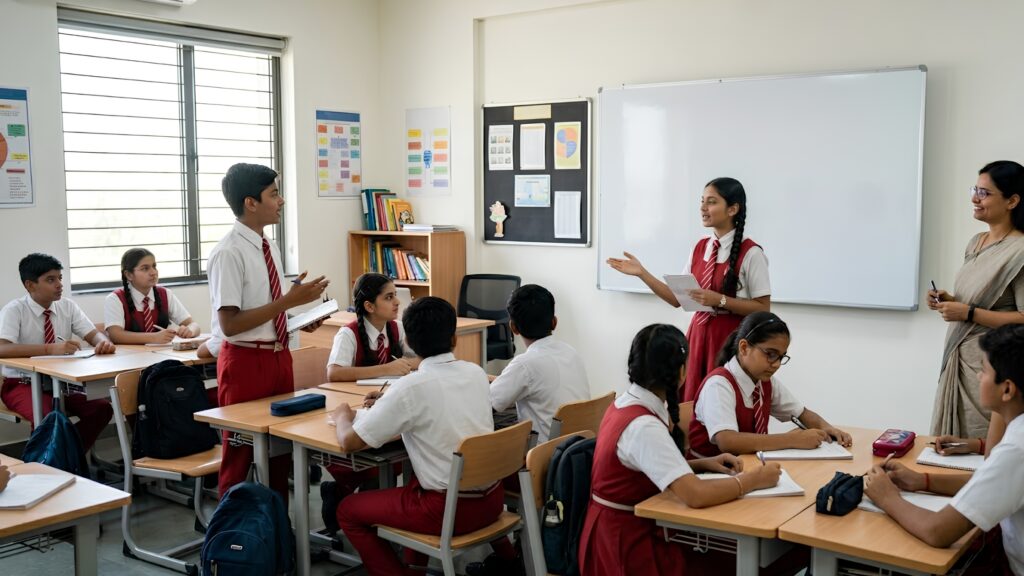
A student can have the best ideas in the room. But if they cannot express those ideas clearly, no one will ever know. Communication skills in classroom settings are built slowly – through presentations, group discussions, storytelling activities and even casual conversations with teachers.
Good communication is not just about speaking well. It also means listening carefully, writing clearly and understanding what others are trying to say. These are learning skills for students that develop only with regular practice.
Picture a student who struggles to speak up in class during junior school. Year by year, with the right environment and encouragement, that same student starts presenting confidently in front of the entire school. That transformation happens because communication was treated as a skill – something that can be practised and improved.
At home, parents often notice this change too. Children who are encouraged to communicate in school start expressing their thoughts better at the dinner table, during family discussions and even when they meet new people. It becomes a natural part of who they are rather than something that feels forced or scary.
3. Problem Solving – Turning Challenges into Opportunities
Life throws problems at everyone. What separates those who move forward from those who get stuck is how they respond to those problems. Problem solving skills for students are best developed inside a classroom where challenges are part of daily learning.
When a maths problem does not work out, a student has two choices. Give up or try a different approach. When a science experiment fails, they can either feel defeated or ask why it failed and try again. Schools that build a problem solving mindset teach students to always choose the second option.
This skill is especially powerful because it connects directly to real life. A student who learns to break down complex problems in school carries that same approach into their career. Whether they become an engineer, a doctor, a business owner or a teacher – problem solving will always be at the center of their work.
Real life example – imagine two students given the same assignment with missing instructions. One waits for help. Other figures it out using available resources and common sense. That difference in approach is built inside classrooms over years of practice and encouragement.
4. Teamwork – Growing Together is Better Than Growing Alone
No one succeeds entirely alone. Every career, every project and every achievement involves working with other people at some point. Teamwork skills for students are among the most practical life skills in school that directly translate into the real world.
Group projects, sports, cultural events, science fairs – all of these teach students how to work with people who think differently from them. How to divide responsibilities. How to handle disagreements without falling apart. How to support a teammate who is struggling.
These might sound like small things inside a classroom. But they are the exact same skills needed in a corporate office, a hospital, a startup or any workplace you can think of.
There is another side to teamwork that does not get talked about enough. It builds empathy. When students work closely with classmates from different backgrounds and with different strengths, they learn to appreciate those differences. They become less judgmental and more collaborative by nature.
A student who has genuinely learned teamwork does not wait to be the star of every project. They understand that helping others succeed is also a form of winning. That mindset is rare and incredibly valuable.
5. Time Management – Respecting Your Own Hours
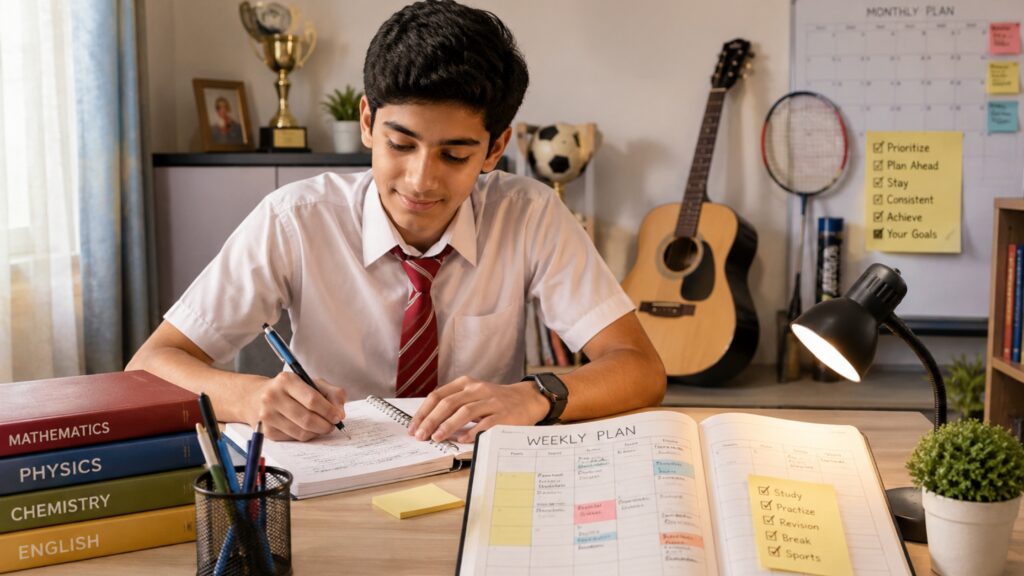
Ask any working professional what skill they wish they had learned earlier and most will say time management. It is one of those skills students need to succeed that rarely gets a dedicated class – yet it is practised every single day inside a good school environment.
Deadlines for assignments teach students that time is limited. Balancing studies with sports and extracurricular activities teaches them that priorities matter. Learning to prepare for exams without last minute panic teaches them that consistent effort beats cramming every single time.
A student who manages time well does not just perform better academically. They feel less stressed. They have more room for the things they enjoy. They build a sense of discipline that becomes deeply personal over time.
Real life example – two students both have the same exam in two weeks. One plans daily study sessions and finishes with three days to spare for revision. Other starts two nights before and barely sleeps. Same amount of time was available to both. Only one used it well. That difference starts in school.
Quick Summary – Why These 5 Skills Matter
| Skill | What it Builds | Where it Helps |
| Critical Thinking | Analytical mindset | Exams, career decisions |
| Communication | Clarity and confidence | Interviews, relationships |
| Problem Solving | Resilience and creativity | Every field of work |
| Teamwork | Collaboration and empathy | Workplace and life |
| Time Management | Discipline and focus | Academics and career |
Wrapping Up
Marks will fade from memory. Ranks will stop mattering after a point. But skills stay. Skills every student should build in a classroom are the ones that shape how they think, how they speak, how they work with others and how they handle life when it gets difficult.
A school that focuses on these skills is not just preparing students for exams. It is preparing them for everything that comes after.
If you are looking for a school that truly builds these skills alongside strong academics,
Alok Sansthan is a place worth visiting. Give your child a foundation that lasts.
Frequently Asked Questions
Q1. Why are classroom skills more important than just academic knowledge? Academic knowledge gives students information. Classroom skills give them the ability to use that information effectively in real life situations.
Q2. At what age should children start developing these skills?
Earlier is always better. Even primary school children can start building communication and teamwork skills through simple group activities and daily classroom interactions.
Q3. How can parents support skill development at home?
Encourage open conversations at home. Give children small responsibilities. Let them solve minor problems on their own before stepping in to help.
Q4. Do these skills help in competitive exams too?
Absolutely. Critical thinking helps in tricky questions. Time management helps in exam preparation. Communication helps in written answers. All five skills directly support better exam performance.
Q5. How does Alok School focus on building these skills?
Alok School integrates skill development into daily classroom activities, group projects, sports and extracurricular programs – ensuring every student grows both academically and personally.