


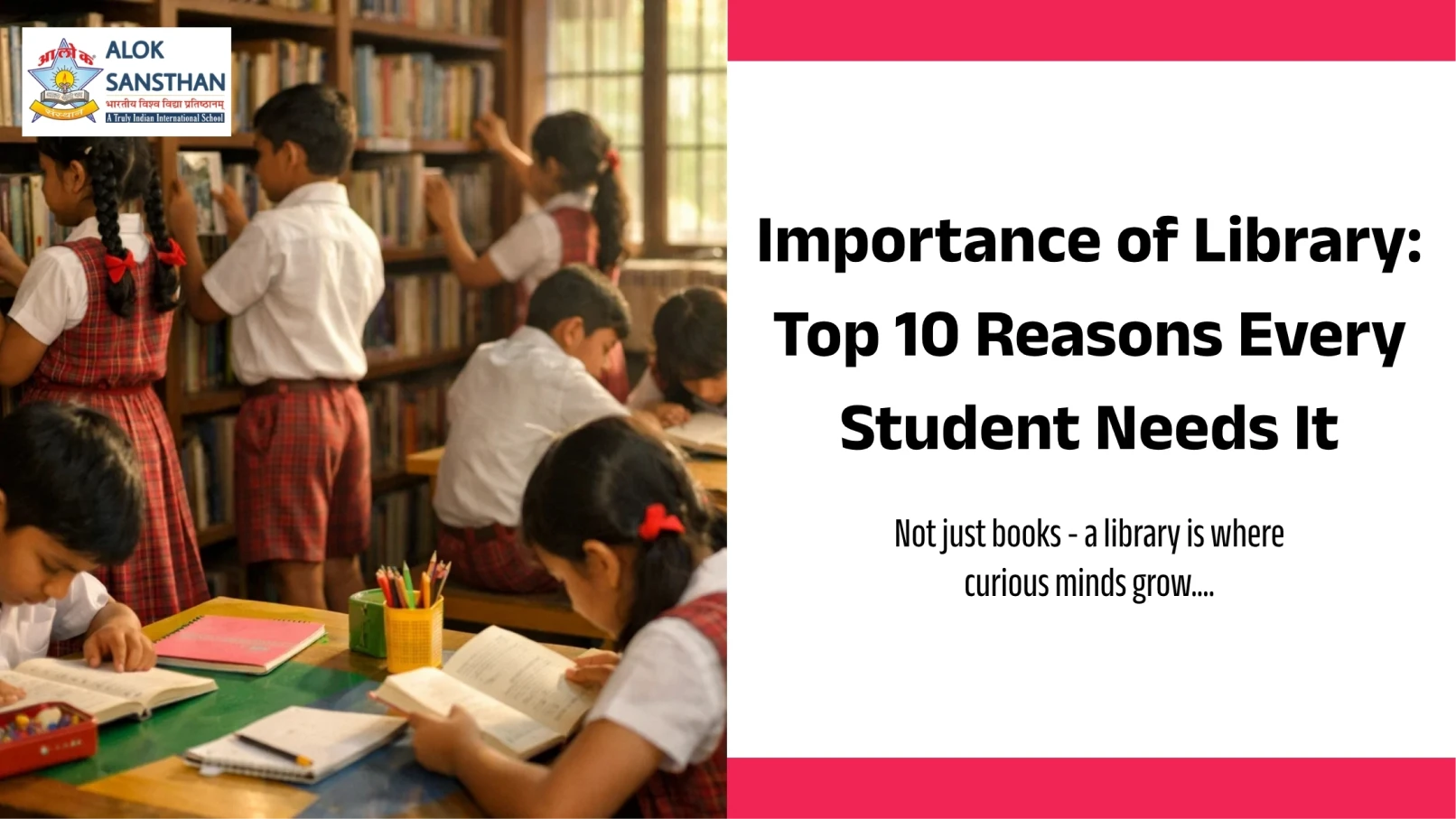
Most students walk past their school library like it is just another room. Some think it is only for bookworms. Others feel it is outdated—why go to a library when everything is on Google, right?
But here is what nobody tells you. Students who actually use their library regularly do better in studies, think more clearly and become more confident over time. It is not a coincidence.
A quick Google search gives you an answer. A library gives you understanding. There is a big difference between the two. Let’s talk about why every student—no matter what class or stream—genuinely needs a library in their life.
1. It Builds a Reading Habit That Stays With You
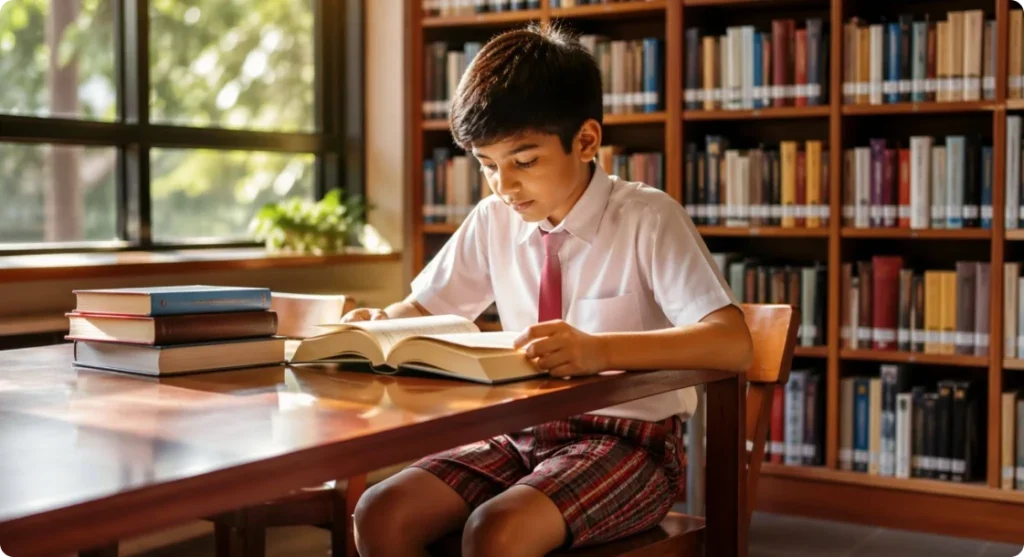
Reading is honestly one of the best habits a student can build. And a library is the easiest place to start. The moment you walk in, you are surrounded by books on science, history, stories, technology and so much more. That environment does something to you—it naturally makes you want to pick up a book.
Students who read regularly have better vocabulary and stronger memory. They understand things faster. These are not just exam skills—these are life skills. Even 30 minutes of daily reading builds something inside you that no coaching class can. The value of reading shows up slowly but it shows up for sure.
2. You Get So Much More Than Your Textbook
Your textbook covers what your syllabus needs. A library covers what your mind needs. That is the real difference.
Library shelves have reference books, encyclopedias, old newspapers, science journals and magazines. Many school libraries today also have digital access and e-books. When you are working on a project or preparing for a big exam, your textbook alone is just not enough. A library fills that gap. You get real case studies, expert opinions, historical records—things that actually make your answers stand out. Students preparing for board exams or entrance tests feel this benefit the most.
3. It Gives You a Space Where You Can Actually Focus
Be honest—studying at home is tough. There is always something going on. Your phone buzzes, someone is watching TV nearby or there is just too much noise. A library removes all of that without you having to do anything.
The quiet around you puts your brain in a different mode. Studies show that students absorb information better in calm environments. When everyone around you is focused, you naturally become focused too. Even one hour daily in a library can change how much you actually get done.
4. Your Academic Performance Goes Up—Genuinely
This is one of the most direct school library benefits that teachers notice. Students who use library resources regularly score better, write more detailed answers and ask smarter questions in class.
Why does this happen? Because a library pushes self-learning. When you look something up on your own—out of curiosity or for a project—it sticks in your head much better than something a teacher explained once. Academic growth is not just about marks. It is about becoming someone who knows how to find answers and think through problems. A library quietly trains exactly that.
5. It Teaches You How to Research Properly
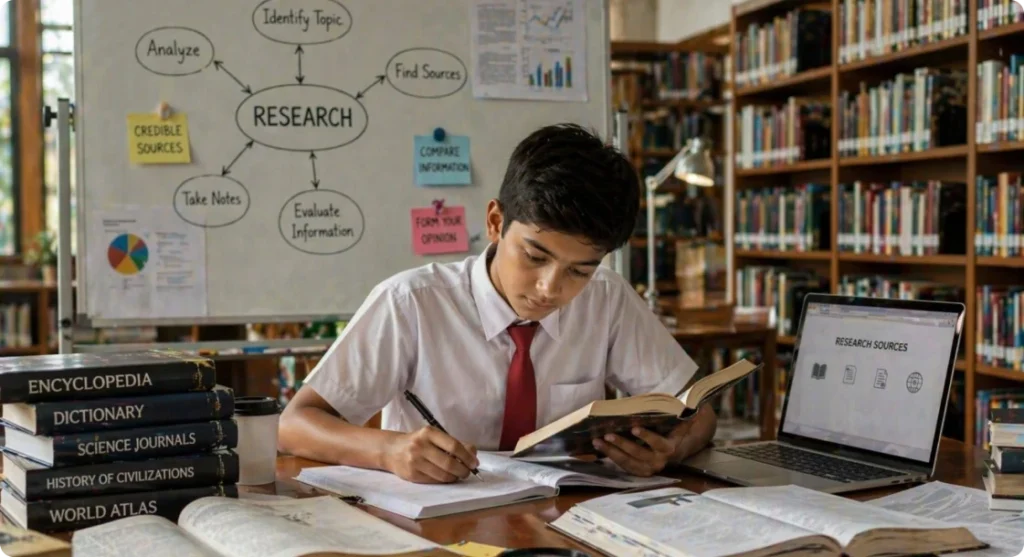
Every student at some point has to research something—a school project, a college application or later in a job. The earlier you learn to do this properly, the better off you are.
A library teaches you to find credible sources, compare what different books say and then form your own opinion. These are analytical skills that even many adults are weak at. When you work with real books and journals regularly, you start understanding the difference between solid information and random stuff on the internet. A student who knows how to research well always has an edge—in school and beyond.
6. It Makes You an Independent Learner
Good students do not wait for someone to spoon-feed them everything. They go find answers on their own. A library is built for exactly that kind of person—or it builds that kind of person in you.
No one tells you what to read or how long to sit. You pick your book and go at your own pace. This freedom is actually very healthy. It builds discipline and curiosity together. For students preparing for JEE, NEET or UPSC—exams that demand months of self-study—getting comfortable with independent learning early is a real advantage.
7. You Start Seeing the World Differently
Good books do something beyond giving information. They show you different cultures, different time periods and different ways of thinking. A student who only reads their syllabus has a limited view. A student who reads widely sees the world in a much more balanced way.
Reading history from multiple authors, going through literature from different countries or picking up a biography of someone great—all of this shapes how you think. It builds empathy. It builds curiosity. These qualities make you not just a better student but honestly a better person to be around.
8. Your Writing Gets Better Without You Realizing It
Strong writing comes from reading a lot. There is no shortcut. When you regularly read well-written books, your brain quietly picks up good sentence structure, vocabulary and how ideas flow together. After a few months, it starts showing in your own writing.
Students who visit their library consistently write cleaner exam answers and more structured essays. Teachers notice this. Even in how they speak—wide readers express themselves more clearly and with more confidence. This is one of those library benefits that sneaks up on you slowly and then becomes very obvious.
9. It Is a Safe Place for Students Who Ask Big Questions
Every curious student has questions that go way beyond what gets covered in class. Sometimes they are too shy to ask. Sometimes there just is not enough time. A library gives you the freedom to explore those questions on your own, without any judgment.
Whether a student is curious about space, coding, philosophy, art or ancient history—a library has something for them. This kind of exploration outside the syllabus is often what separates really exceptional students from average ones. Many well-known scientists, writers and leaders have talked about how one book they found in their school library changed the direction of their entire life.
10. It Creates a Habit of Learning That Never Stops
The biggest thing a school can give a student is not just knowledge—it is the habit of looking for knowledge. A library does this better than anything else.
Students who grow up using libraries do not stop learning after school ends. They carry that habit into college, into their careers and into daily life. People who keep learning stay more adaptable, more creative and more successful—especially in a world that keeps changing fast. A student who falls in love with books never really stops growing.

Final Thoughts
A library is not just a room with shelves. It is honestly one of the most underused resources in most schools. From building focus and research skills to improving writing and broadening how you see the world—the benefits run deep. Every student who makes a habit of using their library regularly will look back one day and feel it was one of the smartest things they did.
Your Child Deserves the Best Learning Environment
At Alok Sansthan, students have access to a well-equipped library filled with books, references and resources across all subjects. Everything a growing student needs—under one roof.
Give your child a stronger foundation—Enroll Today!
Frequently Asked Questions
Q1. Why is a library important for students?
Ans: A library gives students access to books and resources beyond their textbook. It builds reading habits, improves focus and teaches students how to find information on their own—skills that stay for life.
Q2. How does a library help in academic growth?
Ans: Students who use a library regularly score better and write stronger answers. Looking things up on your own makes information stick better and also builds research skills that directly improve classroom performance.
Q3. Can a library improve writing and communication skills?
Ans: Yes. Regular reading helps your brain naturally pick up better vocabulary and sentence flow. Within a few months it starts showing clearly in how you write and speak.
Q4. Is a school library still useful when everything is available online?
Ans: Absolutely. Internet gives quick answers but a library gives deep understanding. Books and journals are verified and well-researched—they help you think critically in a way random searches never will.
Q5. How much time should a student spend in the library daily?
Ans: Even 30 to 60 minutes daily is enough. Consistency matters more than hours. A student who visits regularly will notice clear improvements in focus and academics within just a few weeks.