



School life is not easy anymore. Students wake up early, rush through breakfast, sit through hours of classes and come home with a pile of homework. By evening, many of them are mentally drained. Some are anxious. Some are just going through the motions.
Parents see this. Teachers see this. But most of the time, nobody is quite sure what to do about it.
This is something many people overlook. The benefits of yoga for students are backed by real research and the results are not small. Better focus, lower stress, stronger bodies and yes, even better grades. Yoga does all of this and it has been doing it long before wellness became a trend.
Yoga Is Not What Most People Think It Is
Say the word yoga and most people picture adults in fancy gym clothes doing complicated stretches. That image puts a lot of parents off. It puts students off too.
But actual yoga, especially yoga for kids, looks nothing like that. It is simple. It is accessible. And it works on the body and the brain at the same time, which is why it is so effective for young learners.
When a student breathes deeply and holds a simple pose, two things happen together. The body relaxes and the mind slows down. That is not something a quick snack break or a scroll through a phone can do. Yoga creates genuine calm, not just distraction.
That combination of breath and movement is what separates yoga from regular exercise. A run can tire the body out. Yoga settles the mind. Both matter, but for a student sitting through six hours of school, mental settlement is often what is missing most.
The Benefits of Yoga for Students Are Very Real
Focus Gets Better and Teachers Notice It
One of the biggest benefits of yoga is what it does to concentration. Students who practice regularly, even fifteen minutes a few times a week, become noticeably better at paying attention.
Think about what a yoga pose actually requires. You have to hold still. You have to breathe. You have to keep your mind from wandering or you lose your balance. That is the exact same mental skill needed to sit through a lesson and actually absorb what is being taught.
Concentration improvement does not happen overnight. But within a few weeks of regular practice, most students feel it themselves. They get less distracted. Work feels less overwhelming. Sitting through a long class period becomes easier.
Teachers who have run yoga classes in school say the same thing again and again. After yoga, students are calmer. More present. Ready to learn.
Stress Is a Bigger Problem Than Most Adults Realize
A lot of students are stressed. Not tired, not lazy. Actually stressed. Exam pressure, fear of failure, friendship problems, constant performance expectations, it all piles up quietly.
Stress management for students is rarely taught in schools even though it affects everything. How well a student sleeps. How they eat. Whether they can concentrate during a test. All of it is connected to stress.
Yoga gives students real tools for managing this. Simple breathing exercises can calm the nervous system within minutes. A student who knows how to slow their breath down before walking into an exam hall has something genuinely useful. That can make a real difference for students.
Mental health for students should be treated as seriously as physical health. A student who is anxious and overwhelmed is not going to perform well, no matter how hard they studied. Addressing the inner state is just as important as covering the syllabus.
Bodies Need Movement Too
Children sit too much. Six, sometimes seven or eight hours a day. That kind of stillness creates real physical problems. Stiff backs. Tight shoulders. Poor posture that affects how a student feels and even how alert they stay during class.
Physical fitness for children through yoga is different from sports because it is completely non-competitive. There is no team selection. No comparison. No pressure to perform. A student who is not sporty at all can walk into a yoga session and do just fine.
Over time, regular practice builds genuine strength and flexibility. Posture improves. Students feel physically more comfortable sitting at a desk for long periods. Small things like that actually make a real difference to how well a student can focus.
The Importance of Yoga in School Is Growing for Good Reason
More and more schools are starting to see the importance of yoga in school not as an extra subject but as a support system for everything else.
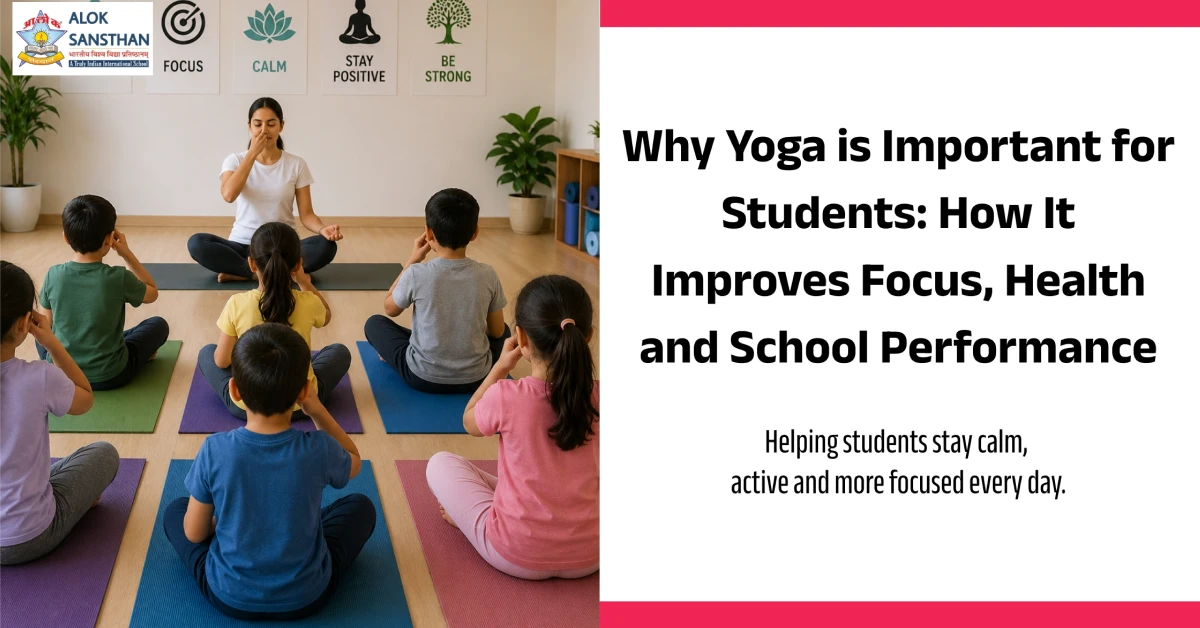
When an entire class does a few minutes of breathing together before a lesson starts, the classroom usually feels calmer afterward. Less restlessness. Fewer disruptions. Students who were distracted a minute ago are suddenly a little more settled.
Schools that have added structured yoga classes in school report some consistent outcomes. Attendance improves. Behavioral issues reduce. Participation in lessons goes up. These are not dramatic overnight changes but they are real and they add up over an academic year.
Yoga for kids works best when it fits the age group. Young children love movement-based yoga with fun animal poses and storytelling. Older students respond better to breathwork and simple mindfulness techniques. The format can change. What matters is that it happens consistently.
Academic Performance and Yoga Are More Connected Than People Think
Here is something most people do not expect. Yoga actually improves academic performance. Not indirectly. Directly.
Students who practice yoga regularly have shown measurable improvements in working memory and attention span in research studies. Reading comprehension improves. The ability to sit with a difficult problem instead of giving up gets stronger.
Holistic development is often spoken about in vague terms. But this is what it actually looks like in practice. A student who manages stress well, sleeps properly, feels physically healthy and has trained their focus is going to perform better than one who has none of those things, regardless of raw intelligence.
Discipline and focus are two of the most valuable qualities a student can develop. Yoga builds both through consistent practice. Not through pressure. Not through punishment. Just through showing up regularly and doing the work.
Emotional Awareness Is Something Yoga Builds Quietly
This part does not get talked about enough. Yoga teaches students to notice what they are feeling before those feelings take over.
A student who learns to recognize when anxiety is building, and who has a breathing technique to use in that moment, is developing emotional intelligence that most adults never learn. That kind of self-awareness affects everything. How they handle conflict. How they cope with failure. How they treat other people.
Student wellness is not just about being physically healthy or getting good marks. It is about a young person understanding themselves well enough to function well under pressure and recover when things go wrong. Yoga builds that gradually and quietly.
Making Yoga Part of a Healthy Lifestyle for Students
The real value of yoga shows up when it becomes a habit. One class is nice. Fifty classes over six months actually change something.
A healthy lifestyle for students does not require a complete overhaul of their daily routine. It starts small. A few minutes of breathing in the morning. A short yoga session three times a week. That consistency is what creates lasting change.
Students who practice regularly tend to sleep better. Their relationship with stress improves. They reach for their phones less when something is bothering them because they have other tools now. These shifts are not dramatic but they are meaningful.
Starting young is important here. Habits formed during school years tend to stay. A student who learns at age ten how to calm themselves down with breath control carries that skill into adulthood. That is a gift with a very long shelf life.
What Parents and Teachers Can Actually Do
If you are a parent reading this, you do not need to enroll your child in an expensive studio class. A free beginner yoga video for kids on any platform, done three times a week at home, is more than enough to see real results within a month or two.
If you are a teacher, try this. Before your first lesson of the day, ask students to sit straight, close their eyes and take five slow deep breaths. Just that. Do it every day for two weeks and notice what changes.
The importance of yoga does not require a major school policy change to experience. It can start in one classroom, on one morning, with one teacher who is willing to try something simple.
Bringing It All Together
Students are carrying a lot. More than they usually say out loud. The answer is not always more pressure or more study hours.
Sometimes the most useful thing a parent or teacher can do is teach a child how to breathe properly. How to sit with difficulty without falling apart. How to bring their attention back when it wanders.
The benefits of yoga for students reach into every area of school life. Focus. Mental health. Physical fitness. Academic performance. Emotional strength. These are not separate problems with separate solutions. They are connected and yoga addresses all of them through one consistent practice.
Whether a student starts at home, joins yoga classes in school or practices in a community setting, the starting point does not matter much. What matters is starting.
Keep it simple. Keep it regular. The difference will come on its own.
At Alok Sansthan, yoga is more than just an activity added to the timetable. Regular yoga classes help students stay active, improve concentration and handle academic pressure in a healthier way.
Along with academics, the school encourages habits that support both mental and physical well-being. By giving students space to relax, focus and build confidence, Alok Sansthan supports their overall growth inside and outside the classroom.
FAQs
1. What are the benefits of yoga for students?
Yoga helps students improve focus, reduce stress, stay physically active and feel mentally calmer. Regular practice can also support better concentration and classroom performance.
2. Why is yoga important in school?
The importance of yoga in school goes beyond fitness. It helps students stay disciplined, manage academic pressure and create a calmer learning environment inside the classroom.
3. Can yoga improve concentration in students?
Yes, yoga can improve concentration by training students to stay present and control distractions. Simple breathing exercises and poses help sharpen attention over time.
4. Is yoga good for kids of all ages?
Yes, yoga for kids can be adapted for different age groups. Younger children usually enjoy playful movements, while older students benefit more from breathing techniques and mindfulness.
5. How often should students practice yoga?
Even practicing yoga for 15 to 20 minutes a few times a week can make a noticeable difference in focus, stress levels and overall wellbeing.